Introduction
Selecting the right material for Swimming Pool Steps plays a critical role in safety, durability, maintenance, and long-term satisfaction. Pool steps are not simply an entry point; they are a structural and functional component that must withstand water exposure, weight loads, temperature changes, and frequent foot traffic. Whether designed for Above Ground or Inground Swimming Pool Steps, the material choice determines how secure the steps feel, how they age over time, and how well they integrate with the surrounding pool environment. This article delivers a focused, material-by-material analysis to help homeowners, facility managers, and designers identify the most suitable materials for swimming pool steps based on performance, safety, and usability rather than appearance alone.
Understanding Why Material Choice Matters for Swimming Pool Steps
Material selection defines how Swimming Pool Steps perform under real-world conditions. Pool steps are constantly exposed to moisture, chlorine or saltwater, UV radiation, and mechanical stress. A poorly chosen material may become slippery, degrade chemically, crack structurally, or demand frequent replacement. Conversely, the right material ensures consistent footing, supports Heavy Duty usage, and maintains integrity for years.
Beyond durability, material choice affects comfort and safety. Steps with built-in Anti-Slip surfaces reduce fall risks, while materials with thermal stability remain comfortable under sun exposure. Maintenance requirements also vary significantly: some materials resist algae buildup naturally, while others require regular cleaning or sealing. Importantly, the compatibility between the material and pool type—Above Ground or Inground—determines installation feasibility and long-term stability. Evaluating materials through these practical lenses allows for informed, performance-driven decisions.
Plastic and Resin Materials for Swimming Pool Steps
Plastic and resin-based Swimming Pool Steps are widely used, especially for Above Ground Swimming Pool Steps, due to their affordability, corrosion resistance, and lightweight construction. These materials are molded into ergonomic shapes and often include integrated Anti-Slip tread patterns, enhancing safety for everyday use.
High-density resin resists fading and chemical damage better than basic plastics, making it suitable for prolonged outdoor exposure. Plastic steps are also easy to install and relocate, which is beneficial for seasonal or temporary pools. However, not all plastic materials are equal. Lower-grade plastics may flex excessively under weight, limiting their suitability for Heavy Duty or high-traffic environments. Over time, UV exposure can cause brittleness unless UV-stabilized formulations are used.
Plastic and resin steps typically pair well with steps with Handrails, as the lightweight structure allows secure attachment without compromising balance. While these materials may not offer the premium feel of concrete or fiberglass, they remain a practical and safe choice when properly specified.
Stainless Steel as a Structural Material for Pool Steps
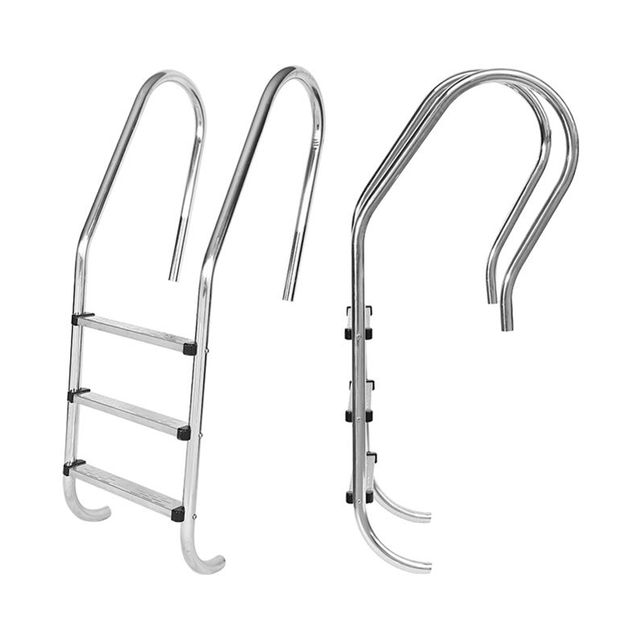
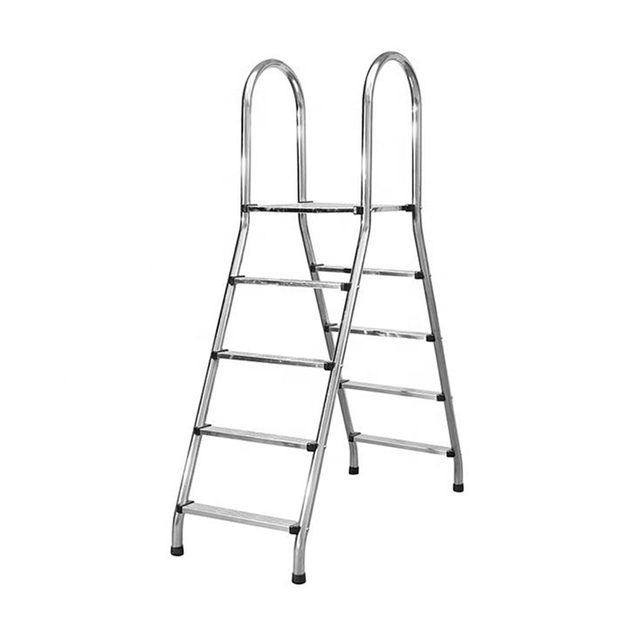
Stainless steel is frequently used as a structural or supportive material rather than the primary stepping surface in Swimming Pool Steps. Its primary advantage lies in strength, corrosion resistance, and load-bearing capacity, making it ideal for Heavy Duty Swimming Pool Steps in commercial or high-use residential settings.
Steel-framed steps are often combined with plastic, fiberglass, or composite treads to balance strength with comfort. Stainless steel maintains structural integrity even under constant water exposure and temperature variation. It also integrates seamlessly with steps with Handrails, offering excellent stability for users requiring additional support.
However, stainless steel alone can become slippery if not paired with textured or Matte finishes. It also tends to absorb heat, which may cause discomfort in direct sunlight. As a result, stainless steel excels as a support framework rather than a standalone stepping surface, particularly for Inground Swimming Pool Steps requiring reinforced installation.
Concrete and Masonry Pool Steps: Strength and Permanence
Concrete and masonry represent the most permanent materials for Inground Swimming Pool Steps. These materials are typically poured or built on-site, allowing for full customization in shape, depth, and layout. Their weight and rigidity provide unmatched stability, making them ideal for long-term installations.
Concrete steps support custom Anti-Slip textures through exposed aggregate, broom finishes, or surface coatings. They also accommodate integrated Matte surfaces that reduce glare and enhance traction. From a durability standpoint, concrete withstands heavy foot traffic and environmental stress exceptionally well.
However, concrete requires proper sealing to resist chemical penetration and surface degradation. Repairs can be labor-intensive, and installation costs are higher than prefabricated options. Despite these considerations, concrete remains a top-tier solution when permanence, customization, and structural strength are priorities for Swimming Pool Steps.
Fiberglass Pool Steps: Integrated and Smooth Solutions
Fiberglass Swimming Pool Steps are commonly molded as part of the pool shell or installed as prefabricated units. Their seamless surface minimizes joints where dirt and algae can accumulate, simplifying maintenance. Fiberglass naturally resists corrosion and chemical damage, making it suitable for both residential and semi-commercial applications.
The material offers a smooth yet customizable surface texture, allowing for built-in Anti-Slip zones without sacrificing comfort. Fiberglass steps maintain consistent temperature and are gentle on bare feet, enhancing user experience. They are particularly popular in Inground Swimming Pool Steps where visual integration matters.
One limitation is load capacity; fiberglass may not match concrete or steel for Heavy Duty usage unless reinforced. Repairing damage requires specialized techniques, but when properly installed, fiberglass steps deliver a balanced combination of durability, safety, and low maintenance.
Comparing Above Ground vs Inground Swimming Pool Steps Materials
Material suitability varies significantly between Above Ground Swimming Pool Steps and Inground Swimming Pool Steps due to differences in structure and installation.
| Pool Type | Common Materials | Key Advantages | Key Limitations |
| Above Ground | Plastic, Resin, Steel Frame | Easy installation, lightweight, removable | Lower load capacity |
| Inground | Concrete, Fiberglass, Steel-Reinforced | Permanent, customizable, high stability | Higher cost, complex install |
Above Ground pools benefit from modular, lightweight materials that can be adjusted or removed, while Inground pools demand materials capable of permanent integration and structural reinforcement. Matching material properties to pool type ensures optimal performance and safety.
Safety, Texture, and Finish: Anti-Slip and Matte Considerations
Regardless of base material, surface treatment is critical for Swimming Pool Steps. Anti-Slip textures reduce accident risk, especially in shallow areas where water movement is constant. Textured plastics, etched concrete, and molded fiberglass all contribute to safer footing.
A Matte finish further enhances visibility and reduces glare, improving depth perception underwater. This is particularly valuable for steps with Handrails, where users rely on both tactile and visual cues for balance. Safety-focused finishes should never be an afterthought; they are a core functional requirement that complements the chosen material.
Conclusion
The best materials for Swimming Pool Steps depend on pool type, usage intensity, safety priorities, and long-term maintenance expectations. Plastic and resin excel in Above Ground applications, stainless steel provides structural reinforcement, concrete offers unmatched permanence, and fiberglass balances comfort with durability. By evaluating materials through performance, safety, and compatibility rather than appearance alone, pool owners can select steps that deliver reliability, comfort, and confidence for years to come.
FAQ
Q1: What is the safest material for Swimming Pool Steps?
Materials with built-in Anti-Slip textures, such as textured fiberglass or treated concrete, provide the highest safety levels.
Q2: Are plastic Swimming Pool Steps durable enough for daily use?
High-quality resin steps are suitable for regular residential use but may not support Heavy Duty traffic.
Q3: Which material works best for steps with handrails?
Steel-supported structures combined with textured treads offer excellent stability for steps with Handrails.
Q4: Do matte finishes really improve pool step safety?
Yes, Matte surfaces reduce glare and enhance underwater visibility, improving overall step safety.
Q5: Can the same material be used for Above Ground and Inground steps?
Some materials overlap, but structural demands differ, making material selection pool-type specific.


