A pool should feel like a place to relax—but the moment someone hesitates at the edge, grips the handrail too tightly, or tries to “jump the last step” because the surface feels slick, safety becomes the real priority. In our daily work supplying pool facilities and builders, we see that many slip incidents don’t happen in the deep end. They happen at the entry point: swimming pool steps. That’s because steps combine three risk factors in one small area—water, smooth materials, and changing body balance. Children run. Seniors move cautiously. Guests don’t know the step depth. And the surface is wet almost all the time.
From our perspective as a pool equipment manufacturer, anti-slip design is not just a “nice feature.” It is the difference between an entry system that feels stable and welcoming—and one that creates anxiety, complaints, and avoidable accidents. In this article, we’ll share the anti-slip features that truly matter for swimming pool steps, how to evaluate them with simple checks, and how to choose step designs that stay safer over time (not just on day one).
Why Swimming Pool Steps Need Dedicated Anti-Slip Design
It’s tempting to think “any step is fine as long as it’s strong.” But pool steps are a special environment:
Continuous wet film: Water reduces friction and can create a slippery layer.
Sunscreen + body oils: These make surfaces slick and harder to clean.
Algae and biofilm: Even small growth can reduce traction dramatically.
Barefoot traffic: Safety must work without shoes, for different foot sizes.
Entry & exit stress: People are stepping while shifting weight and holding items.
So the best anti-slip strategy is a system—surface texture, tread geometry, drainage, and user support working together.
The Most Important Anti-Slip Features (And What They Actually Do)
Surface Texture That Adds Friction (Without Hurting Bare Feet)
A reliable anti-slip step surface needs micro-texture that increases grip when wet—but should not be sharp enough to scratch skin or snag swimsuits.
What to look for:
Fine-grain texture or patterned embossing
Consistent texture across the full tread area
Smooth edges around the texture (comfort + safety)
What to avoid:
“Glossy” surfaces that look nice but become slick
Texture only in the center, leaving edges slippery
Aggressive roughness that irritates the skin (especially for kids)
Tread Pattern That Breaks the Water Film
Even a textured surface can become slippery if it holds a thin water film. That’s why tread pattern matters. A good pattern helps water move away from the foot contact zone.
Common effective patterns include:
Groove channels
Diamond or dot textures
Ribbed anti-slip lines
These features create “edges” that help the foot grip and reduce sliding.
Drainage Paths (So Steps Don’t Become “Mini Puddles”)
A step with poor drainage can hold water at the edges, turning the tread into a slick platform. Drainage is not only about comfort—it’s a friction issue.
Drainage-related design details that matter:
Slight slope or channels that guide water off the tread
Open structure designs that prevent standing water
Edges that do not trap debris
If a step collects leaves, sand, or sunscreen residue, it usually becomes slippery faster.
Anti-Slip Edge Visibility (Safety Is Also About Confidence)
Many slips happen because people misjudge where the step begins. Anti-slip design should include visual safety cues—especially in public pools or villas used by guests.
Good visibility features:
Contrasting step edge strips
Clear step depth definition
Surface pattern that visually highlights each tread
Even if two surfaces have similar friction values, the one with better visual guidance often “feels safer” and reduces risky movements.
Rounded, Safe Tread Edges (Prevent Trips and Foot Injuries)
Sharp edges can cause bruises and cuts—especially when swimmers exit with less balance. Rounded edges also reduce accidental toe catches that lead to stumbles.
This is a safety feature that is often overlooked because it’s not labeled “anti-slip,” but it prevents the kind of movement that leads to slips.
Anti-Slip Performance That Lasts After Cleaning and UV Exposure
Some anti-slip coatings degrade, peel, or become smoother with time. In outdoor pools, UV and chlorine exposure can accelerate wear. Long-term traction is what matters.
Ask practical questions like:
Does the anti-slip surface rely on a coating, or is it molded into the material?
Will the texture remain after repeated brushing and cleaning?
Is the material stable under sunlight and pool chemicals?
A step that’s “safe on day one” but slick after one season is not a good solution for real facilities.
Quick Comparison Table: Anti-Slip Features That Make a Real Difference
Feature | Why It Matters | Best For | Common Problem If Missing |
Molded texture (micro-grip) | Adds friction under wet feet | All pools | Smooth, slippery treads |
Grooves / tread pattern | Breaks water film, improves grip | Outdoor & high-use pools | Sliding during entry/exit |
Drainage design | Prevents puddles and residue buildup | Leafy areas, villas | Slime, algae, debris trapping |
Visible step edge | Helps users place feet correctly | Public pools, rentals | Missteps, stumbles |
Rounded edges | Reduces trip and injury risk | Family pools | Toe catches, bruises |
UV/chemical resistance | Keeps traction over time | Outdoor pools | Surface becomes polished/slick |
How We Evaluate Anti-Slip Quality in Practice (Simple Checks You Can Use)
You don’t always need lab equipment to spot good anti-slip design. Here are practical checks we use when reviewing step solutions with customers:
Check 1: Wet Foot Traction Test (Controlled)
Wet the surface and gently press your foot to see if you feel resistance during a slow shift. A good tread gives a stable “grip feeling,” not a sliding sensation.
Check 2: Water Film Behavior
Pour water onto the tread and observe:
Check 3: Cleaning Reality
Imagine the pool after a busy weekend:
Will sunscreen residue be easy to scrub out of grooves?
Will debris lodge into patterns?
Is the surface likely to become slick between maintenance cycles?
A good anti-slip feature should not create a cleaning nightmare.
Anti-Slip Design for Different Pool Users (One Size Doesn’t Fit All)
Family pools (kids + adults)
Priorities:
Hotels and public pools
Priorities:
Long-term slip resistance under heavy foot traffic
Fast drainage and easy maintenance
Strong structural stability + consistent step height
Senior-friendly pools / therapy pools
Priorities:
Anti-slip features work best when the step geometry supports safe movement.
Common Mistakes When Choosing Swimming Pool Steps (And How to Avoid Them)
Mistake 1: Choosing based on appearance only
Glossy or overly smooth designs may look premium but can be risky in wet use.
Mistake 2: Over-aggressive rough surfaces
Very rough textures can cause discomfort, especially for kids, and may lead to complaints.
Mistake 3: Ignoring drainage and cleaning
A step that traps residue becomes slippery faster, even if it starts with decent grip.
Mistake 4: Not matching the step to the user environment
Outdoor pools need stronger UV stability and better debris handling than indoor pools.
Closing Thoughts (From Our Team)
When people think about pool safety, they often focus on the deep end, lifeguards, or signage. But in our view, the most important safety zone is where every swimmer begins and ends their swim: the swimming pool steps. Anti-slip performance isn’t a single “feature box” you tick—it’s a combination of surface texture, tread pattern, drainage behavior, edge visibility, and durability under real pool conditions. Choosing the right anti-slip step design helps reduce accidents, improves confidence for children and older users, and makes the pool feel more welcoming overall.
If you’re planning a new pool build or upgrading an existing entry system, we’re happy to share practical recommendations based on your pool type, user profile, and installation environment. To learn more about step options and other pool access solutions, you can visit Guangdong Fenlin Swimming Pool & Sauna Equipment Co., Ltd. for more information. And if you’d like, you can contact our team with basic site details—we’ll help you identify step designs and anti-slip features that make sense for long-term use without overcomplicating the project.
FAQ
1) What anti-slip surface is best for swimming pool steps?
A molded, barefoot-friendly textured surface is usually best. It increases grip when wet without relying on coatings that may wear or peel over time.
2) Do grooves on swimming pool steps really reduce slipping?
Yes. Proper groove patterns help break the water film and create traction edges, especially during entry and exit when balance is changing.
3) How do I keep swimming pool steps from becoming slippery over time?
Regular cleaning to remove sunscreen residue and algae is important. Choosing steps with good drainage design also helps reduce buildup that causes slippery surfaces.
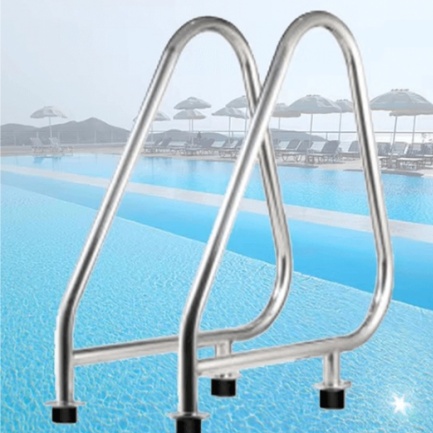
4) Are anti-slip features enough, or do I also need handrails?
Handrails significantly improve safety for children, seniors, and anyone entering/exiting with reduced balance. The safest pool entry combines anti-slip treads with stable hand support.


