If you own or manage a pool, you’ve probably heard two very different pieces of advice about sand: “Never change it—just backwash,” or “Change it every year.” As a manufacturer and supplier of Swimming Pool Sand Filter systems, we can tell you the truth sits in the middle. Sand is durable, but it doesn’t stay “perfect” forever. Over time, filter media becomes rounded, channels form inside the bed, oils and fine debris coat the grains, and the filter’s ability to trap particles gradually drops. The tricky part is that this performance loss happens slowly—so water may still look “okay” until one day it doesn’t. In this guide, we’ll explain realistic replacement intervals, the conditions that shorten or extend sand life, the clear warning signs that it’s time to change, and a practical method to replace media safely. Our goal is simple: help you maintain consistently clear water with less chemical stress, fewer complaints, and fewer emergency clean-ups.
The short answer: typical sand replacement frequency
For most pools using standard #20 silica filter sand, a good working guideline is:
Every 3–5 years for many residential and light commercial pools
Every 2–3 years if the pool has heavy use, high debris load, or frequent water quality issues
Every 5+ years if water chemistry is stable, the filter is correctly sized, and maintenance is consistent
This is not a rule carved in stone, because the real driver is performance, not a calendar date. Some pools need a change sooner; others can go longer. What we recommend is to treat 3–5 years as a planning window, then confirm with the practical signs below.
Why you don’t change sand as often as people think
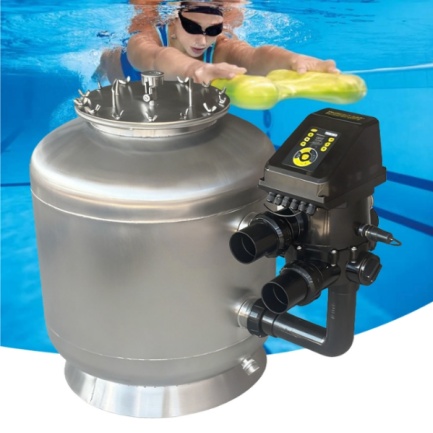
A Swimming Pool Sand Filter works by pushing water through a packed bed of sand. Dirt and suspended solids get trapped in the tiny pathways between grains. Backwashing reverses flow to lift the bed and flush out captured debris—so the filter can keep working.
But backwashing does not restore sand to “like-new” condition. Over time:
Sand grains become rounded
Sharp edges help capture fine particles. As grains wear, they trap less.
Oils and biofilm coat the media
Sunscreen, body oils, and organic residue can make sand sticky or clumped. This encourages channeling and reduces filtration efficiency.
Channeling forms inside the bed
Instead of passing evenly through all sand, water finds “easy paths,” bypassing filtration. You may backwash often but still see cloudy water.
Calcium scaling can bind sand together
If calcium hardness or pH is regularly high, scaling can create hard sections that water flows around.
So yes—sand lasts years. But it is still a consumable media with an end-of-life.
The most reliable way to decide: look for performance signs
Instead of guessing, check how your filter behaves during normal operation. Here are the most common “it’s time” indicators we see in the field:
1 Cloudy water that returns quickly after cleaning
If your water clears temporarily but turns dull again soon—especially after heavy use—your sand bed may be bypassing fine filtration due to channeling or worn media.
2 You backwash more often than before
A rising backwash frequency can indicate the bed is clogging unevenly, or that oils and debris are accumulating faster than the system can handle.
3 Pressure behavior becomes abnormal
Typical pattern: pressure rises as the filter loads with dirt, then drops after backwashing. If the pressure:
spikes too fast,
doesn’t drop much after backwash,
or stays strangely low while water quality is poor,
it may indicate channeling or media condition issues.
4 “Mud balls,” clumps, or hard crusts in the sand
When you open the filter and see clumping, sticky sand, or hardened areas, the media is no longer filtering uniformly.
5 Persistent algae problems despite correct chemistry
If your chemistry is under control and circulation is adequate, but algae keeps returning, poor filtration can be part of the problem.
A practical replacement guide by pool type and conditions
Here’s a planning table we often share with customers. Use it as a starting point, then confirm with the warning signs above.
Pool condition | Typical usage | Maintenance consistency | Suggested sand change window |
Residential, covered or low debris | Low–medium | Good chemistry + routine backwash | 4–6 years |
Residential, open environment (trees/dust) | Medium | Average | 3–5 years |
Hotel/community pool | High | Regular but heavy load | 2–4 years |
School/competition season peaks | Seasonal high | Strong but intense periods | 2–4 years |
Frequent cloudiness/algae events | Variable | Often reactive | 1–3 years (investigate root cause too) |
Chronic high calcium/pH issues | Any | Inconsistent | 2–3 years (and correct water balance) |
Sand vs alternative media: does that change the interval?
Some operators use media alternatives (like glass media or certain zeolite products). Those can change service life, but the key idea remains: replace when performance drops.
Standard silica sand: commonly 3–5 years
Glass media: often marketed for longer life and finer filtration; many pools run it longer, sometimes 5+ years, depending on water conditions
Other specialty media: performance and lifespan vary; follow manufacturer guidance and monitor real-world results
If you’re deciding between media types, we suggest focusing on total operating value: water clarity stability, backwash water use, labor time, and how sensitive the pool is to clarity complaints.
Common confusion: backwashing is not the same as changing sand
Many pool owners ask us: “If I backwash regularly, why change sand at all?”
Think of it like cleaning a reusable filter cloth. You can rinse it many times, but eventually the fibers change, oils stay embedded, and performance drops. Backwashing removes trapped debris, but it doesn’t fully reverse wear, rounding, scaling, or oily residues inside the sand bed.
If you want to extend sand life, combine:
How to change sand safely in a Swimming Pool Sand Filter
Sand change is not difficult, but it must be done carefully to avoid damaging internal parts.
Step 1: Power off and isolate the system
Turn off the pump, close valves, and relieve pressure. Safety matters because trapped pressure can be dangerous.
Step 2: Open the filter and remove old sand
Most systems require manual removal (shop vac, scoop, or drain-and-extract method). Work slowly to avoid cracking laterals.
Step 3: Inspect internal components
Check:
laterals / underdrain assembly (cracks cause sand returning to pool),
standpipe alignment,
multiport valve gasket and sealing surfaces.
Replacing worn internals during a sand change prevents repeat problems.
Step 4: Add water before adding new sand
Filling the tank partially with water helps cushion laterals and reduces impact damage when you pour media in.
Step 5: Add the correct grade and quantity of sand
Use the specified grade (commonly #20 silica for many sand filters) and the correct weight/volume. Too much sand reduces backwash expansion; too little reduces filtration depth.
Step 6: Reassemble, rinse, then filter
After reassembly:
Step 7: Confirm normal pressure baseline
Record the clean starting pressure. This becomes your reference for backwash timing (often when pressure rises ~20–25% above baseline).
The bottom line: how often should you change the sand?
For many pools, changing sand every 3–5 years is a sensible expectation. But the best decision comes from performance signs: water clarity stability, normal pressure behavior, and whether backwashing still restores filtration effectively. If your pool is high-traffic, exposed to heavy debris, or frequently battling cloudiness and algae, you may need to replace sooner—or evaluate whether the filter size and circulation design match your real conditions.
At the end of the day, a reliable Swimming Pool Sand Filter is one of the most cost-effective ways to maintain clear water—because it gives you steady filtration without complicated operation. If you want help selecting a filter size, confirming media quantity, or choosing an insulation/valve configuration that suits your installation, you can learn more from Guangdong Fenlin Swimming Pool & Sauna Equipment Co., Ltd.. We’re happy to share practical recommendations based on your pool type, bather load, and operating habits—so you get clarity you can trust, not guesswork.
FAQ
1) How often do you change the sand in a Swimming Pool Sand Filter?
Most pools replace sand about every 3–5 years, but heavy-use or high-debris pools may need it sooner. Use water clarity, pressure trends, and backwash effectiveness as the final decision.
2) What are the signs that pool filter sand needs replacing?
Common signs include recurring cloudy water, more frequent backwashing, abnormal pressure behavior, and clumped or crusted sand inside the filter.
3) Can I just backwash more instead of changing the sand?
Backwashing removes trapped debris, but it doesn’t reverse sand rounding, oil coating, scaling, or channeling. If filtration performance keeps declining, sand replacement is the more reliable fix.
4) What happens if I replace sand with the wrong grade or too much media?
The wrong grade or incorrect quantity can reduce filtration efficiency and backwash performance, leading to faster clogging, channeling, and unstable water clarity—so always follow the filter’s specified media type and fill amount.


