Procuring pool equipment at scale introduces compounding risks. A single voltage specification error can result in massive return shipping logistics, severe project delays, and heavy electrical retrofitting. Facility managers, contractors, and developers often finalize bulk orders based strictly on hydraulic requirements like gallons per minute and turnover rates. They treat electrical compatibility as an afterthought. This oversight leads to incompatible installations on-site, halting construction and frustrating clients.
To prevent costly procurement mistakes, you must align your site’s electrical infrastructure with equipment specifications before finalizing orders. Understanding the electrical constraints of a property dictates what machinery will actually function once delivered. This guide provides a technical framework for evaluating and planning voltage requirements across large-scale pool projects. You will learn how to audit existing panels, map hydraulic needs to electrical limits, and select the right components for seamless integration.
Infrastructure Dictates Procurement: Existing site electrical capacity (single-phase vs. three-phase, available amperage) must be audited before ordering wholesale swimming pool equipment.
Voltage Limits Performance: 120V circuits restrict pump horsepower and heating capabilities, making 240V or commercial 3-phase systems mandatory for high-turnover commercial applications.
Variable Speed Efficiency Requires 240V: Maximizing energy savings and meeting modern compliance standards typically requires 240V dedicated circuits to support advanced variable speed motors.
Code Compliance is Non-Negotiable: All specified equipment must align with local National Electrical Code (NEC) requirements for dedicated circuits and GFCI protection to avoid failed inspections.
The Impact of Voltage on Equipment Selection
Successful procurement means zero electrical mismatches upon delivery. The machinery you order must integrate seamlessly with the facility's existing breaker panels. You want to avoid requiring unplanned electrical service upgrades, which add severe delays to project timelines. When sourcing wholesale swimming pool equipment, matching the voltage requirements to the site is the foundational step.
Evaluating site electrical infrastructure requires a physical pre-order site audit. Relying on outdated blueprints often leads to errors. Use digital multimeters to verify actual line voltage directly at the equipment pad. Trace the electrical path to confirm dedicated circuit routing. Follow the wiring pathways from the pump motor terminals back to the time clock, automation panel, and sub-panel breaker. Measuring voltage under load is also necessary. Place a digital multimeter directly on the motor terminals during startup. This identifies voltage drops that signal undersized wire runs. Finally, assess the panel capacity. Check available breaker space and total amperage limits before adding high-draw machinery.
Understanding common voltage standards helps filter your procurement options. We see three main configurations in the field:
120V (Single-Phase): Limited to smaller above-ground pools, low-horsepower pumps, and basic auxiliary systems. These carry a high risk of overloading circuits if they are not dedicated.
240V (Single-Phase): The industry standard for in-ground residential and light commercial applications. This allows for higher horsepower, lower amp draw per leg, and variable speed technology integration.
208V/460V (Three-Phase): Essential for heavy commercial environments. These systems offer higher efficiency and longevity for continuous-duty motors.
When you run long conduit lines from the main breaker to the equipment pad, voltage drop becomes a serious issue. A 240V system handles distance much better than a 120V system. If you try to push 120V over 150 feet of standard gauge wire to a 1.5 HP pump, the motor will starve for power, overheat, and fail prematurely. Upgrading the wire gauge helps, but switching to a 240V configuration is the standard field solution.
| Voltage Configuration | Typical Application | Max Recommended HP | Phase Type |
| 120V | Above-ground, small water features | 1.5 HP | Single-Phase |
| 240V | In-ground residential, light commercial | 3.0 HP | Single-Phase |
| 208V / 230V | Mid-size commercial, hotel pools | 5.0+ HP | Three-Phase |
| 460V | Municipal, heavy commercial waterparks | 15.0+ HP | Three-Phase |
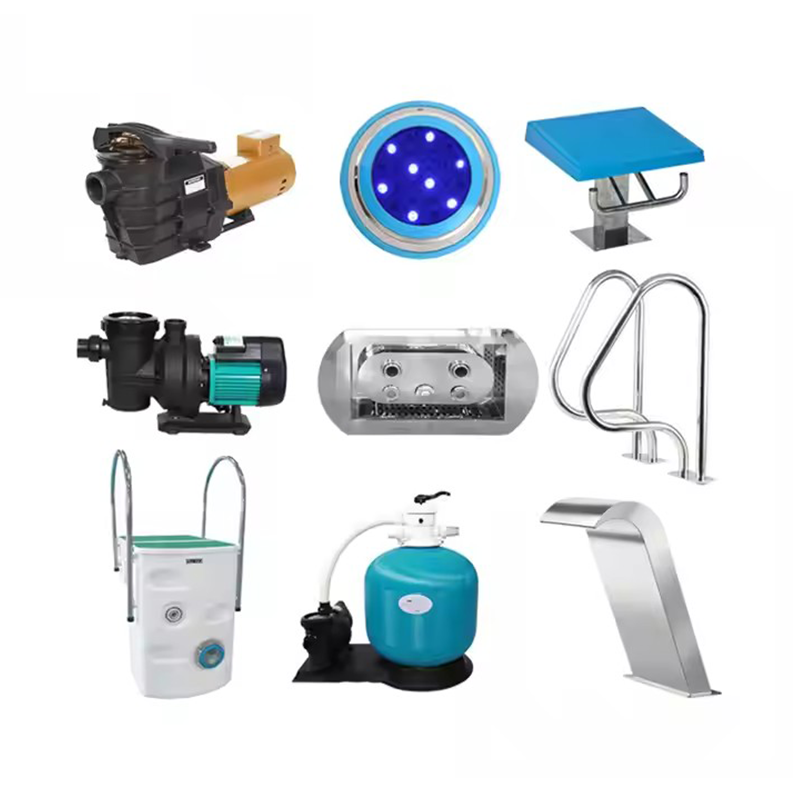
Evaluating Voltage Requirements by Equipment Category
Specifying wholesale pool filtration equipment requires mapping hydraulic needs to electrical sizing. You must align turnover rate requirements with pump horsepower. This horsepower rating subsequently dictates your voltage limits. Cross-reference existing plumbing line sizes with voltage-driven horsepower ratings. This prevents suction cavitation, hydraulic restriction, and premature motor failure.
The transition to variable speed pumps heavily influences voltage choices. The majority of compliant variable speed pumps require 240V to operate their onboard drives and variable frequency drives effectively. Sizing voltage and horsepower correctly allows you to achieve a full pool volume turnover within the ideal 8-to-12-hour continuous run-time window. If you try to force a high-flow variable speed pump onto a 120V circuit, the internal drive will likely reject the input or operate at a severely reduced capacity.
Heating systems and high-draw components demand strict electrical planning. Electric heat pumps require massive amperage. You must calculate the heavy-gauge wiring needed for 240V electric heaters. A standard 140,000 BTU electric heat pump might require a dedicated 50-amp or 60-amp breaker. Gas heaters, conversely, require minimal 120V or 240V draw. This small load is required solely for the digital ignition and control boards, usually pulling less than 5 amps.
When selecting wholesale pool spa equipment and auxiliary systems, managing split loads is critical. Ensure commercial spa packs can simultaneously handle high-draw 240V heating elements and multiple 240V jet pumps without tripping breakers. Auxiliary systems like salt chlorine generators, UV sanitizers, and automated control panels often utilize internal step-down transformers. However, they still require dedicated input voltages to function safely.
Calculate total dynamic head to determine required pump horsepower.
Match the required horsepower to the available voltage at the equipment pad.
Verify the breaker panel has sufficient open slots for the required double-pole breakers.
Size the wire gauge according to the total amp draw and the distance from the panel.
Commercial vs. Residential Voltage Planning
Sourcing wholesale hotel pool equipment involves high-demand environments. The three-phase mandate is a reality for these facilities. Three-phase power is necessary for commercial pumps ranging from 3 HP to 15 HP and beyond. These motors handle 24-hour continuous operation without overheating. Standardizing voltage and horsepower across multiple commercial properties allows for interchangeable backup inventory. This strategy heavily mitigates facility downtime.
Residential development procurement requires a different approach. Specifying 240V single-phase systems for tract housing or community developments ensures compatibility with standard residential electrical panels. You must eliminate reliability risks by avoiding 120V plug-and-play machinery in permanent installations. These lower-voltage units suffer from reduced longevity, limited efficiency, and frequent code compliance issues.
Commercial panels are often wired for 208V rather than a true 240V. You must verify that the single-phase equipment you order is rated for 208V operation. Running a strict 230V/240V motor on a 208V grid causes the motor to pull higher amperage to compensate for the lower voltage. This excess amperage generates heat, which degrades the motor windings over time.
Energy Efficiency, Variable Speed, and Operating Costs
Voltage selection directly impacts long-term operational expenditures. The physics of amp draw explain this relationship. A 240V pump draws half the amperage of a 120V pump for the exact same wattage. This reduction in amperage reduces heat generation in the wiring. It minimizes voltage drop across long wire runs and extends the overall motor life.
Variable speed technology offers substantial returns on investment. Adjusting pump settings to run at lower speeds yields exponential energy savings. It also reduces wear and tear on the wet end components. However, this efficiency requires the stable power delivery of a 240V circuit to power the sensitive control module without interruption.
When you install a variable frequency drive on a commercial three-phase pump, the energy savings multiply. The drive alters the frequency of the electrical supply to control the motor speed. This requires a clean, stable three-phase input. If the facility has voltage imbalances between the phases, the drive will throw error codes and shut down to protect the motor.
Implementation Risks and Mitigation Strategies
Ordering 240V machinery for a site with only 120V service available at the pad is a common risk. Mitigate this by mandating a sign-off from a licensed electrician. They must verify the facility's voltage and amperage capacity before the purchase order is approved.
Ordering three-phase commercial machinery for a light-commercial facility wired for single-phase is another major hazard. Mitigate this by strictly filtering the wholesale catalog by single-phase commercial options. While phase converters exist, they introduce efficiency losses and mechanical complexity.
Non-compliance with NEC Article 680 will halt your project. Ensure all specified voltage configurations allow for proper GFCI protection, bonding, and dedicated circuits. Adhering to current electrical codes is mandatory for passing municipal inspections. GFCI breakers are highly sensitive to voltage leaks. If you share a neutral wire across multiple 120V circuits at the pool pad, the GFCI will trip constantly.
Conclusion
Audit the site's electrical panel and trace wiring routes to confirm available voltage and amperage.
Determine the required hydraulic performance and pipe sizing to establish horsepower minimums.
Filter your wholesale catalog by the intersecting voltage and horsepower requirements.
Provide your electrician's site audit to your wholesale supplier's technical sales team.
Request a submittal package that verifies the electrical specifications of all shortlisted components before ordering.
FAQ
Q: Can a 240V pool pump run on a 120V circuit?
A: No. A 240V motor requires two hot legs of 120V each. Connecting it to a single 120V line will result in the motor failing to start, overheating, or sustaining permanent electrical damage.
Q: What is the standard voltage for commercial pool pumps?
A: While light commercial pools may use 240V single-phase pumps, heavy commercial and municipal pools typically utilize 208V, 230V, or 460V three-phase motors. These provide greater efficiency and durability for continuous operation.
Q: Do variable speed pool pumps require 240 volts?
A: The vast majority of high-performance variable speed pumps require a 240V dedicated circuit to operate their onboard drives. A few manufacturers do offer 120V/240V dual-voltage models for lower horsepower applications.
Q: How do I verify the voltage of my existing pool equipment?
A: Check the manufacturer's data plate on the motor housing. It lists the required voltage, amperage, and phase. Alternatively, trace the line from the pump back to the controller and test the load terminals with a multimeter.
Q: Is it cheaper to run a pool pump on 240V instead of 120V?
A: Running a pump on 240V does not inherently use less electricity, as the wattage remains the same. However, it draws half the amperage, which reduces resistance heat in the wires and improves overall motor efficiency.
Q: Can I use residential pool equipment for a hotel pool?
A: Generally, no. Hotel pool machinery must meet commercial health codes for turnover rates. It is often designed for three-phase power, whereas residential gear is single-phase and not rated for continuous commercial demand.


