Stable water temperature is not just a comfort feature—it is the core indicator of how well a pool facility is managed. Whether the project is a residential backyard installation, a hotel leisure pool, or a commercial aquatic center, the reliability of the Swimming Pool Heating System determines daily operational quality. In our years of manufacturing and supporting heating equipment for international markets, we have observed that most performance issues are not caused by product defects but by inconsistent maintenance routines. A properly maintained swimming pool heating system can operate efficiently for many years, delivering stable temperature control and optimized energy consumption. In this article, we share structured maintenance practices that improve system reliability, reduce unexpected downtime, and protect long-term investment value.
Why Heating System Reliability Should Be a Priority
A heating system works quietly in the background. Because it is not always visible, it is often overlooked until temperature fluctuations occur. However, poor maintenance gradually reduces performance long before visible failure appears.
Reliable heating ensures:
Consistent water temperature
Improved swimmer comfort
Lower operational costs
Extended equipment lifespan
Reduced emergency repair expenses
When heating performance drops, operators typically extend runtime to compensate. This increases energy consumption and accelerates wear on compressors, heat exchangers, and circulation components. Preventive maintenance protects both energy efficiency and structural integrity.
From our experience at Guangdong Fenlin Swimming Pool & Sauna Equipment Co., Ltd., structured care is the difference between short-term functionality and long-term reliability.
Maintain Proper Water Chemistry to Protect Internal Components
Water chemistry directly affects heating system durability, yet it is often underestimated. A swimming pool heating system is continuously exposed to circulating water, meaning internal components are constantly in contact with chemical elements. Even minor imbalances, if sustained over time, gradually weaken performance. From our field experience, many heating efficiency complaints can be traced back to poor water management rather than mechanical defects.
Balanced pH and Corrosion Prevention
When pool water becomes too acidic, metal parts—even corrosion-resistant materials—face accelerated degradation. Acidic water attacks seals, gaskets, and metallic connectors, shortening service life. On the other hand, overly alkaline water promotes scale formation. While titanium heat exchangers are highly resistant to corrosion, they are not immune to mineral accumulation caused by improper pH control.
Maintaining proper balance protects both structural integrity and thermal efficiency.
Recommended water balance ranges:
Parameter | Ideal Range |
pH Level | 7.2 – 7.6 |
Total Alkalinity | 80 – 120 ppm |
Calcium Hardness | 200 – 400 ppm |
Keeping these values stable ensures that internal passages remain clear and heat transfer surfaces stay efficient. It is also important to measure water temperature alongside chemistry levels, as warmer water accelerates chemical reactions and scale formation. Routine testing at least once per week for residential pools—and more frequently for commercial facilities—creates a reliable maintenance baseline.
Scale Formation and Heat Transfer Efficiency
Scale buildup forms when dissolved minerals, particularly calcium, precipitate and attach to heating surfaces. Even a thin layer of scale acts as insulation, reducing the ability of the heat exchanger to transfer energy effectively. As thermal efficiency drops, the system compensates by running longer cycles, increasing energy consumption and mechanical wear.
Descaling should be performed when mineral accumulation is detected. Preventive chemical balancing reduces the need for aggressive cleaning methods, which can also stress components if overused. In well-maintained systems, proper water chemistry significantly reduces downtime and preserves performance stability.
Inspect and Clean Filters to Maintain Proper Flow
A swimming pool heating system depends entirely on stable water circulation. Without adequate flow, even the most advanced heating equipment cannot function efficiently. Circulation ensures that heated water distributes evenly throughout the pool while preventing localized overheating inside the system.
Why Flow Rate Matters
Heating systems are engineered to operate within a specific flow range. If water flow drops below that threshold, safety sensors may trigger pressure or flow fault alarms. Insufficient flow also reduces heat exchange efficiency, forcing compressors or heating elements to operate under stress.
Routine Filter Maintenance
Sand filters should be backwashed according to pressure gauge readings rather than fixed time intervals. When pressure rises 8–10 psi above normal operating levels, backwashing is typically required. Cartridge filters should be removed and rinsed thoroughly, with deeper cleaning performed periodically to eliminate embedded contaminants.
Protect Heat Pump Components from Environmental Stress
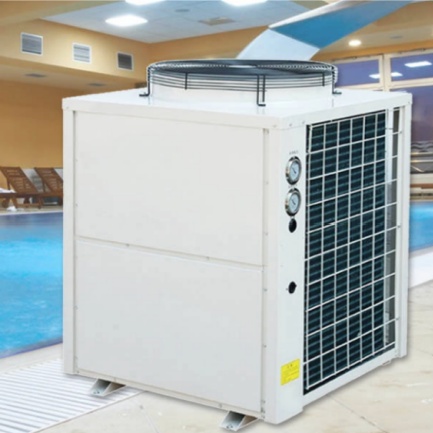
Many modern swimming pool heating systems operate using air-source heat pump technology. These systems rely on environmental air exchange.
Keep Air Intake and Exhaust Areas Clear
Leaves, dust, and debris restrict airflow. Reduced airflow decreases heat transfer efficiency and increases compressor workload.
Maintain at least 50 cm clearance around heating units for optimal ventilation.
Seasonal Inspection
At the beginning and end of each swimming season, inspect:
Fan blades
Coil surfaces
Electrical connections
Drainage outlets
Cleaning condenser coils improves energy efficiency and prevents overheating.
Monitor Electrical Connections and Control Systems
Electrical stability plays a critical role in heating system reliability.
Check Wiring and Terminal Tightness
Vibration and environmental conditions can loosen electrical terminals over time.
Loose connections cause voltage instability and potential component damage.
Regular inspection of terminals, control boards, and wiring insulation reduces risk.
Smart Temperature Control Calibration
Digital controllers should be tested periodically for accuracy. Temperature sensor calibration ensures correct system response.
Incorrect calibration may cause over-heating or short cycling.
Proper calibration stabilizes water temperature and reduces energy waste.
Compressor Protection and Operational Efficiency
The compressor is the heart of many pool heating systems.
Avoid Frequent On-Off Cycling
Short cycling increases wear and reduces compressor lifespan.
Proper thermostat settings and stable water circulation prevent unnecessary cycling.
Monitor Noise and Vibration
Unusual vibration or noise may indicate mechanical imbalance or internal wear.
Early detection prevents major failure.
Winterizing and Off-Season Protection
Seasonal shutdown requires careful preparation.
Drain Water from Heat Exchangers
Residual water can freeze and expand, causing internal cracks.
Draining and protecting pipes prevent winter damage.
Cover and Protect Outdoor Units
Weather-resistant covers reduce exposure to snow, dust, and debris.
Even in mild climates, protective covering extends equipment life.
Routine Inspection Checklist for Swimming Pool Heating System
Maintenance Task | Frequency | Purpose | Risk if Ignored |
Water chemistry testing | Weekly | Prevent corrosion | Reduced heat efficiency |
Filter cleaning | Weekly/biweekly | Maintain flow | Pressure faults |
Coil cleaning | Seasonal | Improve heat exchange | Energy loss |
Electrical inspection | Quarterly | Prevent faults | System shutdown |
Compressor check | Annually | Protect lifespan | Expensive replacement |
Structured inspection ensures consistent performance.
Optimize Energy Efficiency Through Preventive Care
Energy efficiency and reliability are closely connected.
Dirty coils, restricted airflow, and unstable water chemistry increase power consumption.
Preventive maintenance reduces operational cost by:
Maintaining high COP performance
Reducing extended runtime
Minimizing repair interventions
Energy-efficient systems require consistent operational discipline.
The Role of Quality Equipment in Long-Term Reliability
Maintenance practices are most effective when combined with robust equipment design.
At Guangdong Fenlin Swimming Pool & Sauna Equipment Co., Ltd., we focus on:
Titanium heat exchangers for corrosion resistance
High-efficiency compressors
Intelligent control systems
Durable structural components
Our engineering approach ensures that swimming pool heating systems are designed for both performance and long-term durability.
However, even the best system benefits from structured maintenance.
Early Warning Signs You Should Never Ignore
Reliability improves when issues are addressed early.
Watch for:
Slower heating response
Unusual compressor noise
Increased electricity bills
Error codes on control panels
Inconsistent water temperature
Addressing minor issues prevents larger failures.
Long-Term Investment Protection Strategy
A swimming pool heating system is a long-term investment.
Replacing a compressor or heat exchanger is significantly more expensive than routine inspection.
We encourage operators to maintain detailed maintenance logs. Documenting water tests, cleaning schedules, and inspections supports warranty coverage and system longevity.
Consistency protects capital investment.
Conclusion
A reliable Swimming Pool Heating System does not depend on luck; it depends on structured maintenance. Balanced water chemistry, proper airflow, electrical inspection, seasonal preparation, and consistent monitoring collectively improve operational stability. Preventive care always costs less than emergency repair. When the right maintenance practices are applied, swimming pool heating equipment operates efficiently, consumes less energy, and delivers stable comfort season after season.
If you are planning a new installation or evaluating ways to improve heating reliability in your facility, we invite you to learn more about the solutions provided by Guangdong Fenlin Swimming Pool & Sauna Equipment Co., Ltd. Our team is ready to share technical insights and recommend systems tailored to your project requirements. Feel free to contact us for professional guidance and product information.
FAQ
1. How often should a swimming pool heating system be inspected?
Basic inspections such as water testing and filter cleaning should be performed weekly. Electrical and compressor checks are recommended quarterly or annually depending on usage intensity.
2. What reduces swimming pool heating system efficiency most?
Improper water chemistry, clogged filters, and dirty condenser coils are the most common causes of reduced efficiency.
3. Can poor airflow damage a heat pump heating system?
Yes. Restricted airflow increases compressor workload and may cause overheating or premature component failure.
4. Does regular maintenance extend swimming pool heating system lifespan?
Yes. Preventive maintenance reduces internal wear, protects components from corrosion, and significantly extends overall service life.


