A swimming pool looks completely different when the lights come on. Clear water becomes a mirror, steps become safer to navigate, and the whole space feels more inviting—whether it’s a family backyard pool, a hotel facility, or a resort spa. But as any pool owner knows, underwater equipment lives in a tough world: constant moisture, chemical exposure, temperature changes, and long operating hours in peak seasons. When a swimming pool light fails, it’s rarely “just a bulb.” It can mean draining water, opening niches, resealing joints, checking cables, or dealing with flicker and corrosion that comes back again if the real cause isn’t solved. From our perspective as a manufacturer and supplier of pool and sauna equipment, the best way to reduce lighting failures is simple: treat pool lighting like a system, not a single part. In this guide, we’ll share practical maintenance tips that extend the life of a swimming pool light—covering water chemistry, inspection routines, sealing habits, electrical safety, and the small details that prevent big repair bills later.
Why Swimming Pool Lights Fail (So You Can Prevent It)
Most premature failures come from a few repeat causes:
Water intrusion: A compromised gasket, cracked lens, or poor sealing allows moisture into the fixture.
Corrosion: Saltwater pools, high chlorine levels, or low pH accelerate metal corrosion and degrade connectors.
Overheating: Poor heat dissipation (especially for LEDs) shortens lifespan.
Voltage issues: Unstable power, incorrect transformer sizing, or loose connections cause flicker and driver failure.
Mechanical stress: Pulling on cables, improper installation, or impact damage creates micro-cracks that become leaks.
If you maintain the “risk points” above, most lighting problems become avoidable.
Start With the Basics: Safe Operation and Correct Runtime
Use the correct voltage and control method
Many underwater lights are designed for low-voltage operation (commonly 12V AC/DC depending on the model). Running the wrong voltage, using an incompatible controller, or mixing components incorrectly is a common reason for early failure.
Avoid unnecessary long runtimes
LED pool lights are efficient, but heat still matters—especially in warm climates or enclosed niches. If your pool light runs every night for many hours, consider:
This doesn’t just save energy—it reduces thermal stress on drivers and seals.
Water Chemistry: The “Hidden Maintenance” That Protects Your Light
People often maintain water chemistry for comfort and clarity—but it also directly affects your swimming pool light.
Key chemistry issues that shorten light life:
Low pH (acidic water) accelerates corrosion.
High chlorine (especially during shocking) can degrade gaskets and plastics over time.
Saltwater systems increase corrosion risk on exposed metal parts and connections.
Unbalanced alkalinity can make pH swing more often, increasing stress.
Practical tip we recommend
When you do chlorine shock or heavy chemical treatment, reduce light runtime and avoid turning the light on immediately after dosing. High local concentration near the fixture can be harsh on seals.
A Simple Maintenance Schedule That Works
Consistency beats “big repairs later.” Here’s an easy schedule we use as a baseline recommendation:
Maintenance Task | Suggested Frequency | Why It Matters |
Check water chemistry (pH, chlorine, alkalinity) | Weekly | Prevents corrosion and seal degradation |
Visual check for flicker, dim spots, color shift | Weekly | Early warning for driver or connection issues |
Inspect lens for cracks, clouding, or algae line | Monthly | Small defects become leaks over time |
Check niche/fixture seating and cable strain | Quarterly | Prevents mechanical stress and water entry |
Inspect gasket condition (if accessible) | 6–12 months | Gaskets age; replacement prevents intrusion |
Test GFCI/RCD protection | Monthly/Quarterly | Electrical safety in wet environments |
Inspect for Moisture and Leaks Before They Become Failures
For many underwater fixtures, water intrusion starts as a tiny problem:
slight fogging behind the lens
condensation forming after temperature changes
visible water line inside the fixture
corrosion spots near screws or cable glands
What to do if you see early signs
Stop using the light until inspected.
Check for obvious lens cracks and gasket wear.
Confirm cable gland tightness and sealing condition.
If your fixture is serviceable, replace gasket and reseal correctly.
Ignoring early moisture is one of the fastest paths to a full replacement.
Keep the Lens Clean—But Clean It the Right Way
A cloudy lens reduces brightness, forces you to run the light longer, and can trap heat. Cleaning is good—but aggressive cleaning can damage the lens surface or seals.
Recommended approach:
Use a soft cloth or sponge
Mild soap or a pool-safe cleaner
Avoid abrasive pads and harsh solvents
Don’t pry at the lens edge (this risks seal damage)
If algae or scale builds up around the fixture, treat it as a chemistry + circulation issue, not just a cleaning issue.
Protect the Cable and Connection Points (Where Most Problems Start)
In many service cases, the fixture is fine—the issue is in the cable run or connection box.
Common mistakes we see:
pulling the light out of the niche by the cable
leaving the cable under tension (no slack loop)
water entering a poorly sealed junction box
using connectors not rated for wet environments
mixing metals that create galvanic corrosion
Best practice
Ensure a proper service loop behind the fixture.
Keep junction boxes dry and sealed.
Use correct waterproof connectors and strain relief.
If you’re unsure, have a qualified electrician check the installation.
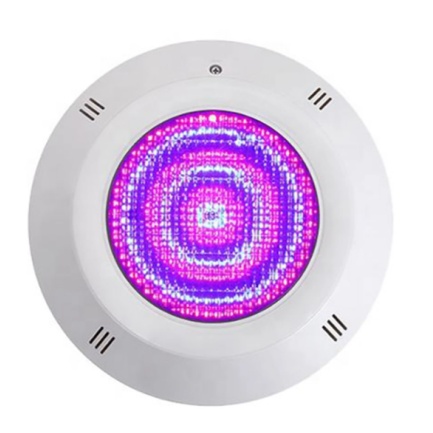
Electrical Safety Checks That Also Extend Lifespan
A swimming pool light is not the place to “guess” electrically. Beyond safety, good electrical conditions also protect the light’s driver and electronics.
Key checks:
Verify transformer rating matches total light load.
Ensure stable input voltage to the transformer.
Tighten terminals (loose terminals cause heat and flicker).
Use appropriate protection (GFCI/RCD as required).
Avoid sharing the circuit with heavy inductive loads if possible.
If you notice flicker, random shutdowns, or color instability, treat it as an electrical diagnosis—not just a lighting issue.
Heat Management: Especially Important for LED Pool Lights
LEDs last long when they stay cool. Underwater conditions help cooling—but the fixture still needs proper heat transfer.
Avoid these heat traps:
running the light out of water for extended periods (during maintenance)
blocked water flow around the niche area
heavy scaling on the fixture surface
incorrect fixture seating that reduces heat conduction
Quick rule: Don’t run underwater lights dry. Even brief “dry running” can overheat seals and electronics.
When to Repair vs Replace
Sometimes maintenance isn’t enough—especially when a fixture has repeated water intrusion or severe corrosion.
A simple decision guide:
Symptom | Likely Cause | Recommended Action |
Flicker or intermittent off | Loose connection / driver issue | Inspect wiring, transformer, controller |
Dim output or uneven brightness | Lens clouding / LED aging | Clean lens; consider replacement if persistent |
Condensation inside lens | Seal/gasket compromised | Service seal immediately |
Water inside fixture | Major sealing failure | Replace or factory service (if supported) |
Corroded screws/trim | Chemistry imbalance / salt exposure | Correct water balance; replace affected parts |
If the light is older and has multiple symptoms, replacement can be more economical than repeated resealing.
Choosing a Swimming Pool Light That’s Easier to Maintain
Maintenance life is not only about how you use the light—it’s also about how the light is built.
Features that typically improve long-term reliability:
robust sealing design and quality gaskets
corrosion-resistant materials
stable driver design with good thermal management
clear installation guidance and compatible accessories
quality control on lens fit and cable gland sealing
From our perspective, the best pool light is the one that gives you bright, stable lighting season after season with minimal intervention—because access and repairs are always the expensive part.
Final Thoughts
Extending the life of a swimming pool light isn’t complicated, but it does require consistency. Keep water chemistry stable, clean the lens gently, protect cables and junction boxes, avoid dry running, and treat early signs of moisture or flicker as warning signals—not annoyances. When these basics are handled well, underwater lighting can remain safe, bright, and reliable for years, with fewer interruptions and fewer costly service calls. If you’re planning a new installation or upgrading existing pool lighting and want options that are designed for durability, sealing reliability, and long-term performance, you can learn more from Guangdong Fenlin Swimming Pool & Sauna Equipment Co., Ltd. or contact the team through their company information channels to discuss your pool type, voltage requirements, and lighting goals.
FAQ
1) How often should I inspect a swimming pool light for leaks?
A quick weekly visual check is ideal, with a deeper inspection monthly. Look for condensation, fogging, or water behind the lens—these early signs help prevent full failure.
2) Can unbalanced pool water chemistry damage swimming pool lights?
Yes. Low pH, high chlorine, and salt exposure can accelerate corrosion and degrade seals, shortening swimming pool light lifespan over time.
3) Why does my swimming pool light flicker after a few months?
Flicker is commonly caused by loose wiring, an undersized transformer, unstable voltage, or a failing driver. It’s best treated as an electrical and connection issue, not just a lighting problem.
4) Is it safe to run an LED swimming pool light out of water?
It’s not recommended. Running an LED swimming pool light dry can cause overheating and damage seals or electronics, reducing lifespan and increasing failure risk.


