Address the operational friction of pool maintenance directly. Backwashing too frequently wastes water, depletes balanced chemicals, and reduces filtration efficacy. Waiting too long strains equipment, degrades water quality, and damages system internals. Pool operators face conflicting industry advice regarding pressure triggers. Recommendations range anywhere from a 5 PSI to a 10 PSI increase. This confusion makes it difficult to accurately diagnose pressure changes in aging filtration systems.
This technical evaluation guide helps establish a reliable pressure baseline and interpret pressure differentials. We will navigate return-jet physics and determine whether persistent pressure issues require maintenance, a media change, or a hardware upgrade. Establishing these metrics ensures your swimming pool sand filter operates efficiently without risking mechanical failure.
Baseline Dependency: The trigger for backwashing is not a universal number, but a specific differential (typically 7–10 PSI) above the system's unique "clean" operational pressure.
Filtration Paradox: A slightly dirty swimming pool sand filter captures smaller particles than a perfectly clean one; premature backwashing actively reduces water clarity.
Hardware Impact: Valve configurations (side mount pool sand filter vs. top mount pool sand filter) and pump types (single-speed vs. variable-speed) fundamentally alter how pressure builds and is monitored.
Return Jet Dynamics: The angle and direction of the return jets (eyeballs) exert physical back pressure on the system, influencing baseline gauge readings.
Upgrade Indicators: Persistent high pressure immediately following a thorough backwash indicates media failure (calcification/mudballs) or lateral damage, signaling the need for a media replacement or upgrading to an energy efficient pool sand filter system.
Establishing the Baseline Pressure for a Swimming Pool Sand Filter
Without a documented clean pressure baseline, gauge readings are arbitrary. They cannot reliably trigger maintenance workflows. A gauge reading 20 PSI might indicate a severely clogged filter on one pool. On another pool, 20 PSI represents the normal clean operating pressure. You must know your specific starting point.
Defining "Clean" Operational Pressure
Record the baseline pressure immediately following a fresh sand installation or a rigorous backwash and rinse cycle. Turn on the pump and let it reach full prime. Wait until the air purges from the tank. Tap the gauge lightly to ensure the needle is not sticking. Read the number. This is your clean baseline.
For systems utilizing variable-speed pumps, record this metric at a specific, consistent pump speed. A pump running at 3450 RPM generates a drastically different baseline pressure than the same pump running at 1750 RPM. Always test and record the baseline at your designated high-speed setting. Write this number directly on the filter tank with a permanent marker.
Variables Influencing the Baseline
Several physical factors dictate your starting PSI. Plumbing diameter, the distance from the equipment pad to the pool, elevation changes, and pump horsepower all contribute to the system's natural resistance. Smaller pipes or longer runs naturally create higher baseline pressures. A 1.5-inch plumbing line creates more friction loss than a 2-inch line.
The physical orientation of the return eyeballs impacts flow resistance. Pointing the jets upward to agitate the surface for skimming creates a different back pressure profile than pointing them downward to circulate deep water. Adjusting these jets shifts the baseline pressure reading. A baseline of 12 PSI on one system and 20 PSI on another can both be perfectly normal.
| System Variable | Impact on Baseline Pressure | Field Observation |
| Plumbing Diameter (1.5" vs 2") | Smaller diameter increases baseline PSI. | Upgrading to 2" plumbing drops baseline by 2-4 PSI. |
| Distance to Pool | Longer runs increase friction and baseline PSI. | Equipment pads 50+ feet away show higher starting pressures. |
| Return Jet Orientation | Restrictive angles increase back pressure. | Removing eyeball fittings temporarily drops pressure by 1-2 PSI. |
| Pump Horsepower | Higher HP pushes more water, raising baseline. | Swapping a 1 HP for a 2 HP pump raises the clean baseline significantly. |
The Technical Threshold: When Should Backwashing Be Triggered?
Compare conservative maintenance triggers against industry-standard thresholds to maximize filter efficiency. You want to avoid risking equipment damage. The goal is capturing the finest debris possible while maintaining adequate flow.
The 7–10 PSI and 8–10 PSI Differential Standards
As dirt fills the microscopic voids between sand grains, flow resistance increases. This causes pressure inside the tank to rise. The consensus threshold for triggering a backwash is a 7–10 PSI increase above the clean baseline. This range balances optimal particle capture with safe pump operation.
Allowing the pressure to rise by this specific amount ensures the sand bed is sufficiently packed with debris. This packed dirt traps finer particles. We call this process filter ripening. Backwashing before reaching this differential prevents the filter from reaching its maximum filtration capability.
The 5–8 PSI Conservative and Moderate Benchmarks
In certain scenarios, a lower threshold of 5–6 PSI is warranted. Undersized filters, heavy debris loads from surrounding foliage, or systems running highly sensitive auxiliary equipment require more frequent backwashing. In-floor cleaning systems need high flow rates to pop up the cleaning heads.
A moderate 6–8 PSI threshold works well when paired with an energy efficient pool sand filter. This prevents variable-speed pumps from ramping up power consumption to overcome excessive flow resistance. You maintain a balance between filtration quality and energy conservation.
Secondary Validation: Flow Rate and Visual Indicators
Pressure gauge readings must correlate with physical flow reduction at the return jets. If the gauge shows a 10 PSI increase but the return flow feels exceptionally strong, the gauge is likely faulty. Weak return flow with a normal pressure reading indicates a suction-side issue, like a clogged skimmer.
Utilize the sight glass on the multiport valve during the backwash cycle. The water initially appears cloudy or dark. Continue backwashing until the water in the sight glass runs completely clear. This visual confirmation ensures you removed the captured particulate.
Risks of Mismanaging the Backwash Cycle
Ignoring pressure triggers carries mechanical and financial consequences. Both over-maintenance and under-maintenance compromise system integrity. You must follow the data.
The Cost of Premature Backwashing
A perfectly clean sand bed allows micro-debris to pass straight through the laterals and back into the pool. A slight layer of dirt tightens the filtration matrix. This enables the capture of smaller particles. Premature backwashing disrupts this ripening process. The result is persistently cloudy water.
Backwashing discharges hundreds of gallons of water. This wastes chemically treated, heated water. You will see increased chemical balancing costs. Utility bills rise as you restore the pool's temperature and chemistry.
The Dangers of Delayed Backwashing
Delaying a backwash places immense mechanical strain on the pool pump. As pressure builds, the pump works harder to push water through the clogged media. This leads to deadheading, overheating, and eventual shaft seal failure. You will hear the pump whining.
Excessive pressure causes channeling. Water forces its way through the path of least resistance. It carves tunnels through the sand bed. This bypasses the filtration media entirely, returning dirty water to the pool. The pressure can crush the internal laterals, requiring a complete filter teardown.
Evaluating Hardware Configurations: Side Mount vs. Top Mount Pool Sand Filter
When chronic pressure issues necessitate a system replacement, evaluate structural designs. Valve placement directly impacts hydraulic efficiency and maintenance accessibility. Choose the right configuration for your equipment pad.
Top Mount Pool Sand Filter Dynamics
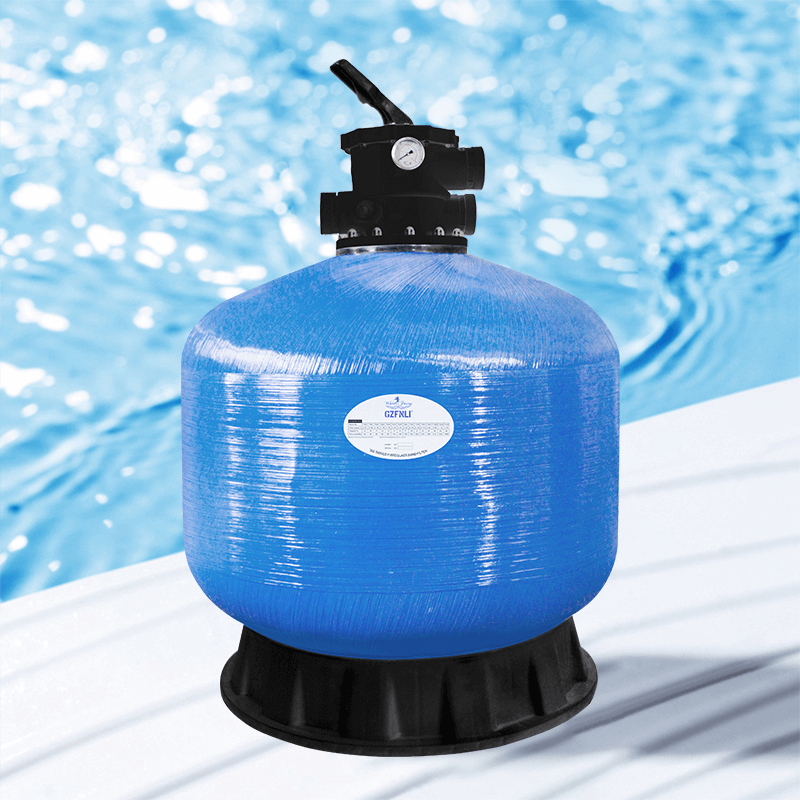
A top mount pool sand filter offers space-saving benefits. It fits well on cramped equipment pads. The multiport valve sits directly on the tank, routing water straight down into the media.
This design presents trade-offs in maintenance accessibility. Accessing the sand bed requires disconnecting the plumbing. You must remove the entire valve and pressure gauge assembly. You must take care not to lift the internal standpipe during this process. Lifting the standpipe damages the laterals buried in the sand.
Side Mount Pool Sand Filter Dynamics
A side mount pool sand filter provides superior hydraulic efficiency. It reduces flow restriction through the valve bulkheads. This configuration handles high-flow commercial or large residential applications easily.
The primary advantage is maintenance ease. The top dome cover allows for quick internal inspection. You can troubleshoot pressure sensors and replace media without disturbing the multiport valve plumbing. Choose between the two based on available pad space, hydraulic demand, and long-term maintenance preferences.
| Feature | Top Mount Configuration | Side Mount Configuration |
| Footprint | Compact, ideal for tight equipment pads. | Requires wider footprint for side plumbing. |
| Hydraulic Efficiency | Standard flow restriction through top valve. | Lower restriction, better for high-flow pumps. |
| Maintenance Access | Requires cutting/disconnecting main plumbing lines. | Top dome removes easily without touching plumbing. |
| Media Replacement | Difficult to avoid lifting the standpipe. | Clear access to sand bed and laterals. |
Modernizing the Pad: The Energy Efficient Pool Sand Filter
Modern upgrades impact pressure monitoring accuracy and overall operational costs. Upgrading components resolves chronic flow issues. You get better filtration with less energy.
Variable Speed Pumps and Pressure Monitoring
Variable speed pumps complicate pressure gauge readings. RPM fluctuations directly alter the PSI. A clean filter reads 15 PSI at 3450 RPM but only 4 PSI at 1500 RPM. You cannot use a low-speed reading to trigger a backwash.
Establish a specific testing speed to ensure accurate differential calculations. Program a dedicated 5-minute high-speed cycle strictly for checking the filter pressure. Reference this specific speed when determining if the 7–10 PSI backwash threshold has been met.
Advanced Filtration Media (Glass vs. Sand)
Traditional silica sand degrades over time. The sharp edges wear down, reducing filtration capability. Alternative media, such as crushed recycled glass, offer lower pressure resistance and better micron capture. Glass media is negatively charged. It attracts fine particles more efficiently and requires less frequent backwashing.
Calculating the ROI of a System Upgrade
Replacing an aging, high-pressure unit yields substantial returns. Pair modern glass media with a variable speed pump. The reduction in electrical consumption offsets the initial hardware investment. You also save money through fewer backwash cycles and lower chemical demand.
Troubleshooting Pressure Anomalies and System Failures
Accurate diagnosis of false readings and underlying system failures prevents unnecessary maintenance. Stop guessing and start testing the components.
Diagnosing Faulty Pressure Gauges
Gauges fail due to vibration, weather exposure, or internal freezing. Test the gauge by turning the pump off. The needle should drop to zero. Tap the dial lightly while the pump is running to see if the needle is stuck.
Replace standard dry gauges with liquid-filled gauges. The glycerin filling dampens vibration. This provides a more accurate reading and extends the lifespan of the instrument.
Persistent High Pressure Post-Backwash & The Sand Replacement Guide
If the pressure remains high immediately after a thorough backwash and rinse, the media has failed. High calcium hardness causes calcification, turning the sand into a solid block. Oils and lotions create mudballs that restrict flow. Attempt a chemical filter cleaner soak first. If that fails, execute a full sand replacement.
Step-by-Step Sand Change Protocol:
Turn off power, relieve system pressure, and open the bottom drain plug to empty the tank.
Remove the multiport valve or the dome cover carefully.
Cover the internal standpipe with duct tape to prevent sand from entering the laterals.
Vacuum or scoop out the old, calcified sand using a wet/dry vac.
Inspect laterals for cracks or wear; replace the entire assembly if damaged.
Fill the tank half-full with water first to cushion the laterals from falling sand.
Pour in the specified weight of new filter sand or glass media.
Reassemble, prime the pump, run a "Rinse" cycle first to remove sand dust, then return to normal filtration.
Low Pressure Scenarios
A drop in pressure below the clean baseline does not indicate a clean filter. It signifies a suction-side issue. Check for a clogged skimmer basket, a full pump strainer basket, a clogged pump impeller, or an air leak in the suction plumbing. The pump is starved for water, resulting in low tank pressure.
Conclusion
Calibrate or replace your pressure gauge with a liquid-filled model to ensure accurate readings.
Document your system's clean baseline pressure at a specific pump speed today.
Verify your return jet orientation to ensure it is not creating artificial back pressure.
Inspect your filter media for calcification or mudballs if backwashing no longer resolves high pressure readings.
FAQ
Q: How do I find the starting pressure of my pool sand filter?
A: Clean the filter thoroughly via backwashing and rinsing. Set your pump to its standard high operating speed. Read the pressure gauge once the system is fully primed and air is purged. This number is your starting baseline pressure.
Q: Why is my pool pressure high after backwashing?
A: If pressure remains high post-backwash, you likely have a faulty gauge, calcified sand, or mudballs deep in the media bed. It may also indicate a blockage in the return lines or damaged internal laterals.
Q: Can I backwash my sand filter too much?
A: Yes. Backwashing too frequently prevents the sand bed from ripening. A slightly dirty filter traps finer particles than a perfectly clean one. Over-backwashing also wastes heated, chemically treated water.
Q: What happens if I wait too long to backwash?
A: Delaying a backwash causes severe flow restriction. This strains the pump motor, risks blowing the internal laterals, and leads to channeling, where dirty water bypasses the sand and returns directly to the pool.
Q: Does return jet direction affect filter pressure?
A: Yes. Pointing return jets sharply upward or using restrictive eyeball fittings creates back pressure in the plumbing. This physical resistance registers on the filter gauge, artificially raising your baseline pressure reading.
Q: How often should filter sand be replaced?
A: Filter sand typically lasts 3 to 5 years. If you experience persistent high pressure, poor water clarity, or notice the sand has calcified into hard chunks, it is time for a replacement regardless of age.


