Routine pool maintenance demands serious physical effort and eats into your weekend. You want clear water without spending hours wrestling with hoses and vacuum heads. Balancing the physical fatigue of manual vacuuming against the battery limits and navigational blind spots of automated solutions dictates your summer schedule. Manual vacuuming requires active labor and constant monitoring. Automated solutions offer hands-free convenience but come with specific operational constraints. Choosing the right method depends entirely on your pool's layout, surrounding environment, and your personal schedule. We will evaluate traditional manual vacuums against modern cordless units. This comparative analysis establishes a framework for evaluating which method aligns with your pool topography, existing infrastructure, and maintenance habits. You will learn how to optimize your cleaning routine, whether you choose full automation, manual precision, or a hybrid approach.
Automation Excels at Routine Debris: A robotic pool vacuum is highly efficient for daily or weekly maintenance on flat or gently sloping surfaces, significantly reducing manual labor.
Manual Control Remains Necessary for Precision: Manual vacuums are non-negotiable for targeted spot cleaning, algae removal, tight corners, and complex step structures that robots frequently miss.
The Evolution of Manual Tools: The manual category now includes both traditional suction-side setups and handheld cordless pool vacuums, offering tiered options for spot cleaning.
The Hybrid Reality: Most successful pool maintenance strategies do not entirely replace manual vacuuming with automation; instead, they utilize a wireless pool robot for 80% of the workload and manual tools for the remaining 20%.
Cost vs. Time Trade-off: While manual setups have a low barrier to entry, the long-term time savings of an automatic pool cleaner often justify the higher initial investment and eventual battery replacement costs.
Defining Success Criteria for Routine Pool Cleaning
Evaluating your specific swimming environment is the first step in choosing the right equipment. Every pool presents unique challenges based on its surroundings, shape, and built-in systems. You must define what success looks like for your daily maintenance routine before selecting your tools.
Debris Load and Type
Different environments dictate specific equipment requirements. A pool surrounded by mature oak or pine trees experiences heavy leaf and needle drop. This requires large filter basket capacities and wide vacuum intakes. Large organic matter quickly clogs standard skimmer baskets and jams small impellers. You need equipment designed to handle bulk debris without losing suction. Pine needles are particularly notorious for slipping through standard mesh and wrapping around drive shafts.
Conversely, pools in arid regions deal primarily with fine dust, sand, and silt. Heavy organic debris is rare, but fine particulate matter settles on the floor daily. This environment demands ultra-fine filtration capabilities. Standard mesh bags often let fine dust blow right back into the water, creating a cloudy exhaust plume. You need pleated filters or specialized micron bags to capture silt effectively. Understanding your primary debris type prevents you from buying a machine that constantly clogs or fails to capture the dirt.
Pool Topography and Surface
Pool shape heavily impacts cleaning efficiency. Rectangular pools offer predictable paths. Automated cleaners navigate these simple geometries with ease, bouncing off parallel walls. Freeform pools feature irregular curves, tight coves, and complex layouts. These shapes often confuse basic algorithmic pathing, leaving certain zones completely untouched.
Depth transitions also play a major role. Extreme deep ends exceeding ten feet challenge many automated units. Steep hoppers create severe inclines. Some machines lose traction attempting to climb out of these deep zones, sliding back down to the main drain. Gradual slopes present fewer navigational issues and allow for consistent cleaning patterns.
Surface materials affect traction and scrubbing requirements. Exposed aggregate and plaster surfaces are rough. They provide excellent grip but harbor algae in microscopic crevices, requiring stiff scrubbing brushes. Vinyl liners are smooth and require gentle brushes to prevent tearing or pattern wear. Fiberglass surfaces are extremely slick. Machines need specialized PVA tracks or soft rubber wheels to maintain grip on fiberglass walls and inclines.
Existing Pool Infrastructure
Your current plumbing and filtration setup affects your baseline need for supplemental vacuuming. Some pools feature in-floor cleaning systems. Pop-up heads push water across the floor, moving debris toward the main drain. These systems reduce the overall debris load but often just push dirt into dead zones and corners. You still need supplemental cleaning for a flawless finish.
Dedicated suction lines provide a convenient plug-in point for manual vacuums. You bypass the skimmer entirely. This setup offers stronger, more consistent suction and keeps the skimmer free to capture surface debris. Pools without dedicated lines force you to vacuum through the skimmer. This method often requires vacuum plates and careful hose management to prevent air leaks, which can cause the pump to lose prime.
Time and Labor Constraints
Evaluate your available weekly hours for maintenance. Manual vacuuming requires active participation. You must set up hoses, prime the system, and physically guide the vacuum head. This process easily consumes an hour or more each week. If your schedule is tight, this active time becomes a significant burden.
Automated solutions shift the workload from active to passive time. You drop the unit in the water and walk away. Your active time reduces to cleaning the filter basket and charging the unit. Frame your evaluation around how much physical effort you are willing to expend during the swimming season.
The Manual Pool Vacuum: Precision, Control, and Effort
Manual vacuuming represents the traditional approach to pool maintenance. It relies on the pool's primary filtration system to generate suction. While labor-intensive, it offers unparalleled control over the cleaning process and remains a staple in professional pool service routes.
Traditional Suction-Side Mechanics
The standard manual setup involves three main components. You attach a weighted vacuum head to a telescopic pole. You connect a corrugated floating hose to the vacuum head. The other end of the hose connects to the skimmer or a dedicated suction line. The pool pump pulls water through the hose, creating suction at the vacuum head.
You must prime the hose before connecting it. Submerging the hose vertically forces all air out of the line. Alternatively, you can hold the hose end over a return jet to blast the air out. Introducing air into the suction line causes the pump to lose prime and potentially run dry. Once connected, you manually guide the vacuum head across the pool floor in overlapping sweeps. The debris travels through the hose, past the pump basket, and into the main filter.
The Modern Manual Alternative
Handheld battery-operated pole vacuums offer a modern twist on manual cleaning. These units do not require floating hoses. They do not rely on the pool's main filtration system. You attach the unit to a standard telescopic pole. An internal battery powers a small motor that pulls water through a localized filter bag.
These handheld units are ideal for targeted spot cleaning. You see a pile of leaves on the steps, and you quickly vacuum them up without unrolling fifty feet of hose. They feature small internal filter bags that capture debris before it ever reaches your main filter. You avoid the lengthy setup and teardown process associated with traditional suction-side mechanics.
Primary Advantages
Absolute user control allows for targeted spot cleaning and immediate debris removal exactly where you need it.
You can easily navigate complex geometries, including steps, swim-outs, tight corners, and shallow tanning ledges.
Traditional setups are superior for handling severe algae blooms. You can vacuum dead algae directly to waste via the multi-port valve, bypassing the filter entirely and preventing the algae from returning to the pool.
Manual equipment has minimal mechanical failure points. There are no circuit boards, sensors, or drive motors to break down.
Excellent for removing heavy debris after a severe storm without clogging an automated unit's smaller intake ports.
Inherent Limitations
The process is highly labor-intensive and physically demanding, causing back strain during long sessions in large pools.
Traditional setups require the pool's main filtration system to be running at high RPMs. This increases energy consumption and adds wear to the main filter media.
Setup and teardown time deter many owners from maintaining a consistent cleaning schedule. Priming hoses and untangling lines is frustrating.
You must backwash or clean your main filter more frequently when vacuuming heavy debris loads, wasting treated pool water in the process.
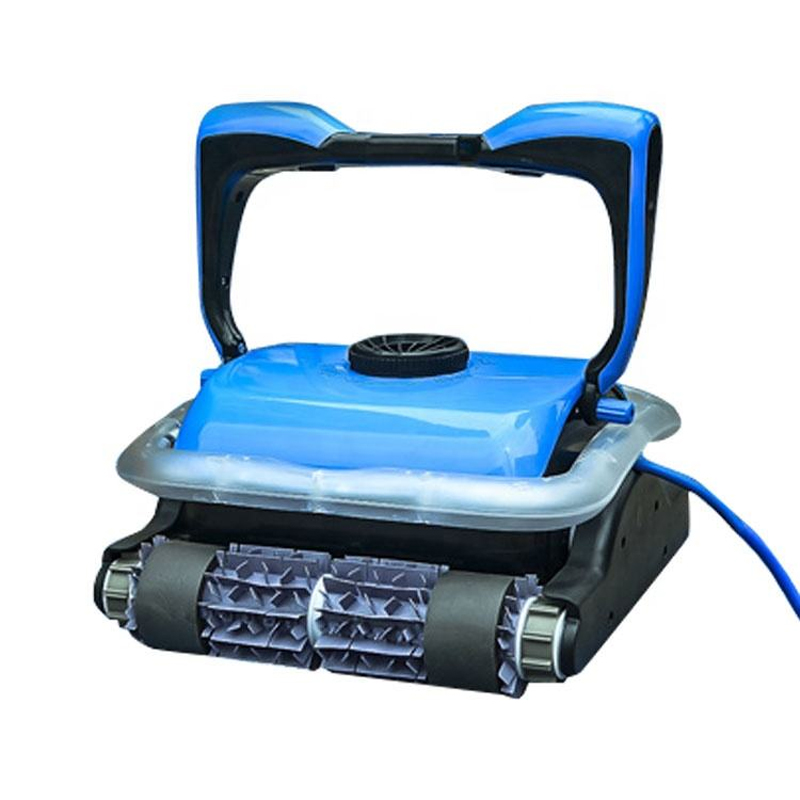
The Cordless Pool Robot Cleaner: Automated Routine Maintenance
Automated technology has transformed routine pool maintenance. A pool robot cleaner operates entirely independently of your pool's plumbing. It represents the ultimate convenience for daily debris removal, allowing you to maintain clear water with minimal physical intervention.
Core Mechanics
A wireless pool robot utilizes onboard DC motors for propulsion and suction. Rechargeable lithium-ion batteries provide the power. You do not plug these units into a wall outlet during operation, and they do not connect to your skimmer. They are completely tether-free, moving autonomously across the pool floor.
Water enters through the bottom intake valves. The internal motor pushes the water through a self-contained filter canister or mesh basket. The clean water exhausts out the top or rear of the unit. This exhaust also helps pin the machine to the pool floor, increasing traction on slippery surfaces. Internal gyroscopes and accelerometers help the unit map the pool, detect walls, and ensure complete coverage without getting stuck in repetitive loops.
Primary Advantages
True drop-and-go convenience allows for comprehensive, routine debris removal without active supervision.
The units offer excellent energy efficiency. They operate on low-voltage DC power rather than relying on a massive main pool pump running at full speed.
They reduce wear and tear on the primary pool filter. All debris is captured in the robot's self-contained basket, extending the time between backwashing cycles.
The cordless design eliminates tripping hazards and surface clutter associated with floating hoses and power cables.
Frees up the skimmer to do its primary job of pulling debris off the water's surface while the robot cleans the floor.
Inherent Limitations
Battery life constraints typically limit runtimes to 90–150 minutes per charge. Exceptionally large pools may require multiple charging cycles for full coverage.
They often struggle to consistently clean complex step formations, sharp 90-degree corners, or extreme deep-end inclines where traction is easily lost.
Operation requires manual retrieval. You must use a provided hook on a telescopic pole to fish the heavy, water-logged unit out of the pool.
You must frequently empty and rinse the internal filter basket to maintain optimal suction performance and prevent debris from rotting inside the machine.
Head-to-Head Evaluation: Which Equipment Wins?
Choosing the right swimming pool cleaning equipment requires comparing performance metrics directly. We evaluate how each method handles real-world conditions, from heavy spring cleanups to daily dust removal.
1. Cleaning Performance and Coverage
A robotic pool vacuum uses systematic, algorithmic pathing. It covers the floor in overlapping patterns. This ensures no area is missed during a full cycle. However, it lacks human intuition. It will spend equal time on clean sections and dirty sections. A manual vacuum relies on human-guided precision. You focus entirely on the dirty areas. You ignore the clean sections. This precision is unmatched for spot cleaning after a localized spill or storm.
Suction power sources differ drastically. A manual setup utilizes the high-flow suction of your main pool pump. A standard pump moves massive volumes of water. This raw power easily inhales large debris, heavy sand, and waterlogged leaves. A robot relies on a smaller, localized internal motor. It moves less water overall but applies that suction directly to the surface. Both methods handle fine particulate matter well, provided you use the correct filter media. Large organic debris, like heavy acorn drops or thick twigs, can sometimes jam the smaller intake ports on automated units, requiring you to clear the impeller manually.
2. Time Investment and Labor Scalability
Manual vacuuming demands active time. You manage the hose. You push the pole. You monitor the suction. A standard pool takes 45 to 60 minutes to vacuum manually. You must also factor in the setup and teardown time. Hose management is notoriously frustrating. The hose tangles. It fills with air. It requires constant adjustment to reach the far ends of the pool without pulling out of the skimmer.
Automated solutions require passive time. You spend two minutes dropping the unit in the water. You wait two hours for it to complete its cycle. You spend five minutes retrieving it and cleaning the basket. The labor scales beautifully with pool size. A larger pool simply means the robot runs longer. Your active physical labor remains virtually zero, regardless of the pool's square footage.
3. Long-Term Value and ROI
Manual equipment requires a very low initial purchase price. A standard vacuum head, hose, and pole are highly affordable. However, the hidden costs lie in energy consumption. Running a main pool pump at high RPMs for hours specifically to vacuum consumes significant electricity. You also waste treated, heated water when backwashing the heavy debris out of your main filter.
A cordless pool cleaner requires a higher upfront investment. However, it provides excellent ROI through energy savings. You can run your variable speed main pump on a low, energy-efficient RPM while the robot cleans the floor independently. The primary long-term expense is the inevitable degradation of the lithium-ion battery, which typically requires replacement after a few seasons of heavy use.
4. Equipment Maintenance and Durability
Manual equipment is relatively simple. The vacuum head features wheels or brushes that eventually wear out. The plastic components become brittle after years of UV exposure. The floating hose can develop cracks or pinhole leaks, causing suction loss. Replacing these parts is straightforward and inexpensive. You must also maintain your main pool filter more frequently, as it catches all the vacuumed debris.
Automated units require different maintenance protocols. You must rinse the internal filters thoroughly after every use. Allowing debris to dry inside the mesh ruins the filter and restricts water flow. You must store the unit out of direct sunlight. Extreme heat degrades lithium-ion batteries rapidly. You occasionally need to clear hair or string from the internal impeller. The drive belts and tracks wear down over time and require replacement to maintain traction on the pool walls.
| Feature | Manual Vacuum | Cordless Robot Cleaner |
| Control Level | Absolute human precision | Algorithmic pathing |
| Setup Time | High (priming hoses, valves) | Low (drop-and-go) |
| Energy Source | Main pool pump (High voltage) | Internal battery (Low voltage) |
| Best For | Algae blooms, complex steps | Routine daily debris removal |
| Physical Effort | High labor intensity | Minimal (retrieval only) |
| Debris Destination | Main pool filter | Self-contained basket |
Implementation Realities and Adoption Risks
Theory often differs from practice in pool maintenance. Understanding the real-world limitations of your equipment prevents frustration. No single tool solves every maintenance challenge perfectly, and field conditions often dictate performance.
The Deep End and Step Dilemma
Even the most advanced automatic pool cleaner faces physical limitations. VGB-compliant main drains present a significant obstacle. These drains are raised and dome-shaped for safety. Units often high-center on these drains, spinning their tracks helplessly until the cycle ends. Steep hopper bottoms in deep ends create severe angles. Machines struggle to maintain traction when climbing out of these deep zones, especially on slick fiberglass surfaces.
Shallow tanning ledges and complex step structures are notorious blind spots. Most units require a minimum water depth to operate safely and prevent the motor from pulling in air. They cannot navigate standard pool steps effectively. You will always find small piles of dirt accumulated in the corners of your steps. Automation handles the broad strokes of the pool floor, but it struggles with the fine architectural details.
Battery Degradation Risk
Cordless technology relies entirely on lithium-ion batteries. You must have realistic expectations regarding their lifespan. Battery capacity diminishes over time due to chemical aging. A unit that runs for 120 minutes when new may only run for 75 minutes after three seasons. Frequent charging cycles accelerate this degradation.
Storing the unit in extreme temperatures damages the battery chemistry. Leaving it baking on the pool deck in the summer sun or freezing in an uninsulated winter shed ruins the cells. Eventually, the battery will no longer hold a sufficient charge to clean the pool. You must factor in the reality of replacing the battery pack or the entire unit after several years of heavy use.
The Hybrid Approach
The most effective maintenance strategy embraces a hybrid approach. You do not need to choose one method exclusively. Utilizing both systems maximizes efficiency and cleanliness. You deploy the automated unit for baseline daily or weekly maintenance. It handles the vast majority of the workload while you relax, keeping the floor free of daily dust and leaves.
You retain a manual vacuum for the remaining detailed work. You use the manual setup for seasonal openings when the pool is full of heavy winter debris that would choke a robot. You use it after severe storms when the debris load exceeds the robot's basket capacity. You use a handheld battery vacuum for quick touch-ups on steps and in tight corners. This hybrid strategy ensures a pristine pool with minimal overall effort.
Conclusion
Take the following immediate steps to finalize your pool maintenance strategy:
Measure the depth and slope angles of your pool to verify compatibility with automated climbing tracks.
Inspect your surrounding landscape to determine if you need a high-capacity leaf canister or an ultra-fine micron filter.
Test your dedicated suction line or skimmer pressure to ensure your current pump can handle a traditional manual setup.
Evaluate your weekly maintenance schedule to decide if the time saved justifies upgrading to an automated unit.
FAQ
Q: Can a pool robot cleaner completely replace manual vacuuming?
A: No. While automated units handle the vast majority of routine floor cleaning, they struggle with complex geometries. You still need manual tools to clean steps, tight corners, shallow tanning ledges, and to vacuum severe algae blooms directly to waste.
Q: What is the difference between a handheld cordless pool vacuum and a robot pool cleaner?
A: Handheld units are manual tools attached to a telescopic pole. You guide them physically for quick spot-cleaning. Robot cleaners are fully automated machines that navigate the pool floor independently to provide comprehensive coverage without active supervision.
Q: How long do the batteries last in a cordless pool cleaner?
A: Most units offer runtimes between 90 and 150 minutes per charge. The overall lifespan of the lithium-ion battery before significant degradation occurs is typically two to four years, depending on usage frequency and storage conditions.
Q: Do robotic pool vacuums work well in extreme deep ends?
A: They often struggle with extreme depths and steep inclines. Pools with deep ends exceeding ten feet or steep hopper bottoms can cause the unit to lose traction. They perform much better on flat surfaces or gradual slopes.
Q: Is an automatic pool cleaner better for fine dust or large leaves?
A: It depends entirely on the filter media installed. Pleated filters or ultra-fine mesh panels are required to trap fine dust and sand. Standard mesh baskets are better suited for large leaves and organic debris.
Q: Can I leave my wireless pool robot in the water all the time?
A: No. Continuous submersion exposes the unit to prolonged chemical degradation from chlorine or salt. It also increases the risk of water breaching the motor seals. Always remove the unit after its cleaning cycle, rinse it, and store it in a shaded area.


