Modern pool construction involves escalating complexity at the equipment pad. Advanced automation, variable speed pumps, and smart sensors often create integration bottlenecks rather than operational efficiency. Installers and facility managers frequently face hidden costs and technical friction from piecemeal equipment sourcing. Mismatched communication protocols, hydraulic inefficiencies, and fragmented warranties plague these disjointed setups, causing unnecessary downtime and inflated labor costs during installation. The strategic shift toward procuring a full set swimming pool equipment from a single source resolves these critical issues. Unified ecosystems eliminate compatibility guesswork entirely. They streamline the physical installation process, simplify electrical wiring, and ensure highly reliable automation across all pool functions, from basic circulation to advanced chemical management.
Eliminated Integration Friction: A complete pool system ensures native communication between pumps, heaters, lighting, and smart controllers, bypassing the need for third-party relays or custom workarounds.
Consolidated Accountability: Sourcing from a single swimming pool equipment supplier eliminates "vendor finger-pointing" during warranty claims and technical troubleshooting.
Optimized Energy Efficiency: Matched components operate at peak hydraulic efficiency, allowing automation systems to dynamically adjust flow rates and heating with minimal energy waste.
Scalability and Future-Proofing: Unified systems provide a stable baseline for adding future smart sensors, automated valves, and advanced chemical management tools without overhauling the core infrastructure.
The Hidden Costs of Piecemeal Sourcing vs. a Complete Pool System
Interoperability Bottlenecks in Automation
Attempting to sync disparate brands creates immediate technical hurdles on the job site. A pump from one manufacturer rarely communicates natively with a controller from another. Installers often rely on basic relay control to bridge this communication gap. This outdated approach limits functionality to simple on/off commands, stripping the equipment of its advanced features. Native RS-485 serial communication, found in a unified complete pool system, allows devices to share rich, continuous data. Without this native protocol, operators lose access to precise variable speed adjustments, real-time diagnostic alerts, and synchronized scheduling. The resulting system requires constant manual intervention. Field technicians end up spending hours programming complex workarounds just to get a heater to recognize that the pump is actually running.
Hydraulic Mismatches and Energy Waste
Improperly paired pumps, filters, and heaters disrupt water flow dynamics and compromise filtration quality. These mismatches increase total dynamic head (TDH) within the plumbing infrastructure. For example, pushing 100 gallons per minute (GPM) through a sand filter rated for only 60 GPM causes channeling in the media and spikes the system pressure. High TDH forces the circulation pump to work significantly harder to move the same volume of water, which drastically reduces the motor's lifespan. It also drives up electrical consumption, negating the benefits of modern variable speed technology. A unified setup ensures all components match perfectly in terms of flow capacity and pressure ratings. This synergy maintains optimal flow rates, prevents filter media channeling, and minimizes energy waste across the entire hydraulic circuit.
Warranty Fragmentation and Vendor Finger-Pointing
Multi-brand setups introduce severe operational risks during inevitable equipment failures. When a complex system faults, manufacturers frequently blame third-party components for the breakdown. If a gas heater throws a low-flow error, the heater manufacturer will blame the third-party variable speed pump, while the pump manufacturer will blame the automation system's programming. This vendor finger-pointing delays critical repairs, leaving pools stagnant and frustrating facility managers. Consolidated sourcing guarantees single-point accountability. You deal with one warranty and one technical support department. This simplifies the resolution process, ensures faster parts replacement, and minimizes overall facility downtime during peak swimming seasons.
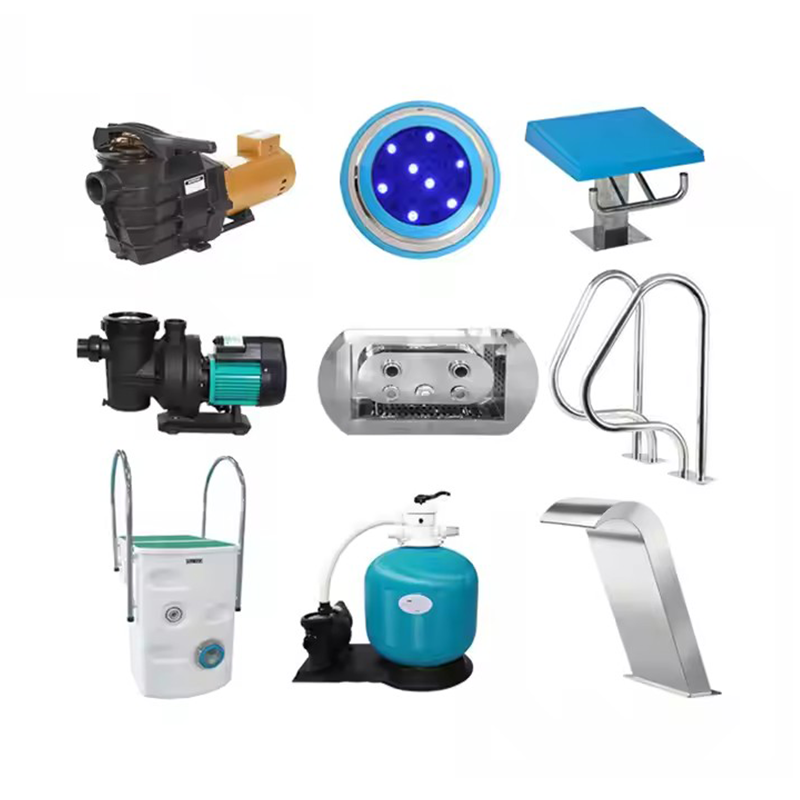
Core Components of a Full Set Swimming Pool Equipment
Variable Speed Pumps and Filtration Units
The circulation system forms the functional baseline of any aquatic facility. Matched flow rates between the pump and filter media are strictly non-negotiable for proper water clarity. Variable speed pumps adjust their motor output to meet specific filtration demands throughout the day based on the affinity laws of hydraulics. When paired correctly with the right sand, cartridge, or diatomaceous earth (DE) filter, they prevent excessive water velocity that can damage filter internals. This precise pairing ensures maximum debris capture, crystal-clear water, and extended intervals between required backwashing or cartridge cleaning. A properly sized system allows the pump to run at lower speeds for longer durations, turning over the water efficiently without over-pressurizing the tank.
Heating and Climate Control Integration
Integrated heaters must communicate directly with the central automation controller to function safely and efficiently. Whether utilizing gas heaters, electric heat pumps, or hybrid setups, native integration optimizes mechanical run times. The system continuously evaluates ambient air temperature, water temperature, and current pump speed. It automatically ramps up the pump RPM before igniting the heater, ensuring the heat exchanger receives the exact water flow required. This prevents thermal lockouts, reduces scale buildup inside the heater, and maximizes thermal transfer efficiency. Furthermore, native communication allows the controller to enforce a mandatory cool-down period, keeping the pump running for a few minutes after the heater shuts off to dissipate residual heat.
Smart Controllers and Motorized Valves for Shared Systems
The automation hub acts as the central brain of the equipment pad. Motorized valve actuators manage complex plumbing configurations effortlessly, directing water flow exactly where it needs to go. In shared pool and spa filtration setups, these 24-volt actuators allow seamless switching between different bodies of water. Users can transition from pool mode to spa mode without ever stepping foot near the equipment pad. The controller simultaneously rotates the suction and return valves, adjusts the heater setpoint to a higher temperature, and alters the pump speed to accommodate the spa's specific hydrotherapy jet requirements. Microswitches inside the actuators ensure the valves stop at the precise degree needed to prevent deadheading the pump.
Sanitation, Chemical Management, and Smart Sensors
Maintaining safe water chemistry requires precise, continuous monitoring and rapid adjustments. Native salt chlorine generators, UV sterilizers, and Ozone systems feed operational data directly back to the main controller. Integrated ORP (Oxidation-Reduction Potential) and pH sensors enable real-time chemical dosing adjustments based on actual bather demand rather than static timers. Advanced smart pool sensors allow facility managers to remotely monitor water quality parameters and system health. This prevents algae blooms, cloudy water, and unsafe swimming conditions before they occur. When the ORP drops due to heavy bather load, the controller instantly commands the salt cell to increase chlorine production or triggers a liquid chlorine feeder.
Integrated LED Lighting and Auxiliary Systems
A unified ecosystem natively syncs color-changing LED lights, deck jets, sheer descents, and landscape sound systems. You no longer need separate, uncommunicative relay panels or secondary remotes to manage backyard ambiance. The central controller handles complex light shows, synchronizing colors across the pool, spa, and landscape lighting using low-voltage transformers. It also schedules water feature activation, allowing operators to trigger complex environmental scenes directly from a smartphone application or wall-mounted touch panel. Instead of toggling power on and off to change colors, native digital control allows direct color selection and dimming capabilities.
How a Unified System Simplifies Technical Integration
Seamless Smart Pool Controller Syncing and Macros
Unified systems offer true plug-and-play functionality for installers. The smart controller automatically recognizes connected devices upon initial startup via the RS-485 connection. It populates menus, configuration screens, and scheduling parameters instantly, saving hours of tedious manual programming. Single-tap macros elevate the end-user experience significantly. For example, a custom "Evening Spa Mode" macro can simultaneously rotate motorized valves, ignite the gas heater, ramp up the pump for hydrotherapy jets, and dim the LED lighting to a specific color. All of this is initiated by a single button press, eliminating the need for the user to understand the underlying mechanical sequence.
Streamlined Installation and Commissioning
Installers benefit massively from standardized plumbing layouts and predictable equipment footprints. Unified wiring schematics reduce electrical errors during the high-stress setup phase. A single-app configuration interface streamlines the entire commissioning process. Technicians spend significantly less time troubleshooting mysterious communication errors between mismatched brands. Instead, they focus on finalizing the physical installation, pressure testing the plumbing, and handing over a fully functional, reliable system to the client.
To properly commission a unified system, technicians follow a standardized sequence:
Mount the main automation panel and wire the high-voltage subpanel.
Connect the RS-485 communication cables from the pump, heater, and salt cell to the main board.
Assign unique digital addresses to each component via the controller interface.
Run a low-speed priming sequence to verify hydraulic integrity and purge air from the lines.
Test all motorized valve rotations to ensure proper suction and return isolation.
Calibrate the ORP and pH sensors using standardized buffer solutions.
Centralized Diagnostics and Remote Monitoring
Managing multiple mechanical components is vastly easier with a single, unified digital dashboard. Centralized diagnostics provide instant, plain-text error codes for the entire equipment pad, eliminating guesswork. Facility managers receive detailed energy usage reports, chemical consumption logs, and routine maintenance alerts directly to their mobile devices. This proactive monitoring approach allows technicians to identify failing components early. If a thermistor begins reading inaccurate water temperatures, the system flags it immediately, preventing the heater from overworking and avoiding a major mechanical failure.
System Integration Comparison
| Integration Aspect | Piecemeal Sourcing | Unified Complete System |
| Communication Protocol | Basic on/off relays, limited data transfer. | Native RS-485 serial communication, full data sharing. |
| Installation Labor | High; requires custom wiring and complex programming. | Low; plug-and-play recognition and standardized wiring. |
| Warranty Resolution | Fragmented; high risk of vendor finger-pointing. | Single-source accountability; streamlined claims. |
| Hydraulic Efficiency | Variable; high risk of mismatched flow rates and TDH issues. | Optimized; components engineered to work together seamlessly. |
| User Interface | Multiple apps or physical panels required. | Single app controls all pool, spa, and landscape functions. |
Evaluating a Swimming Pool Equipment Supplier for Full Sets
Commercial Pool Equipment Capabilities vs. Residential
Not all equipment ecosystems scale effectively to meet rigorous commercial demands. You must carefully assess if a swimming pool equipment supplier can handle higher flow rates, continuous duty cycles, and strict VGB compliance requirements. Multi-body water management and heavy-bather load sanitation require heavy-duty, robust hardware. Ensure the commercial pool equipment offered meets strict municipal health codes, features chemical-resistant internal components, and provides the durability necessary for 24/7 operation in public facilities. Commercial setups often require 3-inch or 4-inch plumbing ports, which residential-grade equipment simply cannot accommodate without severe flow restriction.
Technical Support and Documentation Standards
Evaluate the supplier’s schematic availability and technical documentation before committing to a purchase. Robust engineering support and comprehensive training resources are absolutely vital for installers working with advanced automation. Clear, accurate documentation prevents costly installation errors, ensures proper wire routing, and guarantees the system operates exactly as designed. Suppliers lacking detailed installation manuals or responsive technical support lines will inevitably cause project delays. Field technicians need immediate access to Tier 2 support when troubleshooting complex sensor calibrations or communication bus faults.
Supply Chain Reliability and Parts Availability
Construction project delays often stem from a single missing proprietary component, such as a specific temperature sensor or communication cable. Choose a supplier with a robust domestic inventory and a proven track record of fulfillment. Reliable parts availability ensures that both routine seasonal maintenance and unexpected mechanical repairs happen swiftly. This minimizes facility downtime and keeps the pool operational during critical usage periods. A supplier that stocks replacement O-rings, actuator microswitches, and replacement circuit boards locally is far more valuable than one relying on overseas shipping for basic warranty parts.
Implementation Risks and Mitigation Strategies
Navigating Proprietary Ecosystem Lock-In
The primary trade-off of purchasing a full set is proprietary ecosystem lock-in. You commit heavily to one manufacturer's hardware and software architecture. To mitigate this risk, select open-architecture platforms whenever possible. Look for established brands with a proven history of backward compatibility, ensuring older pumps can still talk to newer controllers. Additionally, prioritize systems that offer open API access, allowing integration with third-party home automation systems or specialized facility management software. This flexibility ensures you are not entirely trapped if the manufacturer discontinues a specific user interface.
Over-Specifying vs. Under-Sizing Components
Pre-packaged equipment bundles do not always match the specific hydraulic realities of custom pool designs. Purchasing an undersized filter leads to rapid pressure buildup, while an oversized pump creates excessive velocity, damaging plumbing and wasting electricity. Always require a custom hydraulic analysis from the supplier before finalizing the equipment list. Calculate the exact total dynamic head, required turnover rates, and pipe sizing to ensure the selected bundle perfectly matches the physical pool. A system designed for a 15,000-gallon pool with short plumbing runs will fail miserably on a 30,000-gallon pool with equipment located 100 feet away.
Future-Proofing for Sensor and Automation Upgrades
Buying a closed-loop system restricts your ability to add future smart sensors or auxiliary upgrades as technology evolves. The aquatic technology landscape changes rapidly, and your equipment pad must adapt without requiring a complete overhaul. Ensure the chosen central controller features physical expansion slots for additional relays and sensor inputs. It must also support over-the-air (OTA) firmware updates to remain current with new communication protocols and software features. Upgradable Wi-Fi antennas and modular circuit boards allow the system to grow alongside the facility's needs.
Conclusion
Piecemeal sourcing may appear cheaper on the initial hardware invoice, but hidden integration costs accumulate rapidly during installation and operation. The extensive integration labor, ongoing operational inefficiencies, and severe warranty risks make a unified approach the superior choice for modern, automated pools. Buyers must prioritize suppliers based on native communication protocols, hydraulic synergy, and robust post-sale technical support to ensure long-term success. Moving to a single-source ecosystem eliminates the technical friction that plagues disjointed equipment pads.
Take the following steps to streamline your next installation or facility upgrade:
Audit your current equipment pad to identify mismatched communication protocols and isolated components.
Calculate the total dynamic head of your plumbing system to verify accurate pump and filter sizing requirements.
Request a comprehensive, unified system quote from a certified supplier that includes automation, circulation, and sanitation.
Schedule a technical consultation with a system integrator to review wiring schematics and automation capabilities.
Review the manufacturer's warranty terms to confirm true single-point accountability for all integrated hardware.
FAQ
Q: What is included in a full set swimming pool equipment?
A: A complete set typically includes a variable speed pump, filtration unit, heater, automation controller, motorized valves, LED lighting, and a sanitation system. The defining feature is that these core components are engineered by a single manufacturer to communicate natively, ensuring seamless integration and optimal hydraulic performance without third-party workarounds.
Q: Can I automate commercial pool equipment from different brands?
A: While basic on/off automation is possible using standard electrical relays, advanced control is severely limited. Accessing variable speed pump adjustments, real-time diagnostic alerts, and synchronized heating requires native serial communication. For full functionality and remote monitoring, utilizing a complete pool system from a single manufacturer is highly recommended.
Q: How does a complete pool system improve energy efficiency?
A: Native communication allows the central controller to run the variable speed pump at the exact minimum RPM required for specific tasks. It adjusts flow dynamically based on whether the heater, chlorinator, or water features are active. This precise control eliminates wasted energy, significantly lowering electrical consumption compared to single-speed or poorly integrated setups.
Q: Is it more cost-effective to buy pool equipment as a bundle or separately?
A: While buying components separately might offer slight upfront hardware savings, bundles are far more cost-effective long-term. Unified systems drastically reduce installation labor, eliminate the need for custom relay wiring, lower daily energy consumption, and simplify maintenance. The consolidated warranty also prevents costly troubleshooting delays.
Q: How do motorized valves integrate into a shared pool and spa system?
A: Motorized valve actuators connect directly to the central automation controller. They allow a single filtration and heating system to manage both bodies of water. With one touch on a control panel or app, the valves rotate automatically, redirecting water flow to seamlessly switch the system between pool mode and spa mode.
Q: Can a complete pool system control lighting and auxiliary water features?
A: Yes, unified systems natively integrate and control color-changing LED lights, deck jets, sheer descents, and even landscape sound systems. This allows users to trigger complex environmental macros directly from a single smartphone application or central keypad, synchronizing specific light colors with water feature activation.


