Managing aquatic facilities in the hospitality sector comes with strict operational realities. Pool downtime, cloudy water, or health code violations directly impact guest satisfaction and facility revenue. When a resort pool is forced to close for emergency maintenance, the ripple effect on the guest experience is immediate. Legacy or undersized filtration systems are often the root cause of these disruptions. These outdated setups drive up utility costs through excessive backwashing, chemical waste, and high energy consumption.
Upgrading to a modern commercial pool sand filter solves these core business problems. Proper filtration infrastructure reduces daily maintenance requirements while ensuring crystal-clear water that meets stringent health department standards. This guide provides a technical framework for facility managers and directors of engineering to evaluate, size, and implement a robust filtration setup. You will learn how to balance upfront equipment costs with long-term operational efficiency, ensuring your aquatic amenities remain a reliable asset.
Turnover Compliance is Non-Negotiable: System sizing must be dictated by local health department turnover rate mandates, not just pool volume.
Media Selection Impacts ROI: Upgrading from standard silica sand to advanced media (like activated glass) can significantly reduce backwash frequency and water loss.
Footprint and Logistics Matter: Pump room dimensions, concrete pad integrity, and access points are primary constraints when retrofitting commercial filtration equipment.
Supplier Support is Critical: Partnering with a specialized pool sand filter supplier ensures access to commercial-grade warranties, replacement parts, and technical troubleshooting.
Defining Success Criteria for a Hotel Pool Filter System
Health Code Compliance and Turnover Rates
The foundation of any aquatic facility upgrade is strict adherence to local health codes. Health departments mandate specific turnover rates, which dictate how long it takes for the entire volume of pool water to pass through the filtration system. Standard commercial turnover rate requirements typically sit between four to six hours for standard swimming pools. High-risk, high-temperature bodies of water like spas, hot tubs, and wading pools require much faster turnover rates, usually between one to two hours, due to elevated bather loads and rapid chlorine depletion.
To meet these mandates, facility managers must calculate the required Gallons Per Minute (GPM) flow rate. The formula requires dividing the total pool volume by the required turnover time in hours, then dividing by sixty minutes. For example, a 150,000-gallon pool requiring a six-hour turnover needs a system capable of sustaining at least 416 GPM continuously. Sizing your hotel pool filter system based on this exact GPM requirement ensures legal compliance. You must also install a certified flow meter, such as a paddle-wheel or ultrasonic model, on the return line to prove this flow rate to health inspectors.
Guest Experience and Operational Uptime
Water clarity is the most visible indicator of pool health to a resort guest. This clarity is measured as turbidity using Nephelometric Turbidity Units (NTU). Most health departments require water to stay below 0.5 NTU. Turbidity correlates directly with the micron filtration capacity of your equipment. A micron is one-millionth of a meter. When a filtration system effectively captures particles smaller than twenty microns, the water achieves a polished quality that enhances the guest experience.
Operational uptime relies on proper system sizing. Undersized filters load with debris too quickly, requiring mid-day closures for emergency backwashing. This disrupts guest access and pulls maintenance staff away from other duties. By engineering the system with adequate surface area and flow capacity, facilities restrict backwashing and routine maintenance to overnight shifts. This ensures the pool remains open and pristine during all scheduled operating hours.
Evaluating Commercial Filtration Equipment: System Architectures
Internal Anatomy of a Commercial Sand Filter
Understanding the internal anatomy of these heavy-duty vessels helps maintenance teams troubleshoot issues effectively. The core structure consists of a hollow tank, typically constructed from reinforced fiberglass or epoxy-coated steel to withstand operating pressures up to 50 PSI. Inside, water enters through a top diffuser, which spreads the flow evenly over the media bed without disturbing the sand surface. The distance between the top of the sand and the diffuser is called the freeboard, which allows the sand bed to expand during backwashing without flushing media down the drain.
The lateral assembly attached to the bottom manifold collects the clean water. Commercial-grade lateral designs use either a hub-and-spoke or a header-lateral configuration. These feature precisely engineered micro-slots that allow water to pass while retaining the fine filter media. Proper lateral distribution prevents channeling, a failure where water carves a direct path through the sand without being filtered. Commercial tanks also feature heavy-duty manways and accessible bulkheads, allowing teams to perform routine inspections and complete media replacements easily.
High-Rate Pressure Sand Filters
Traditional high-rate pressure sand systems remain the most common architecture in the hospitality sector. These units operate by pushing water from the top of the tank down through the media bed under pressure from the circulation pump. They typically operate at a filtration velocity of 15 to 20 GPM per square foot of filter surface area. As water travels through the sharp edges of the sand, particulates are trapped, and clean water exits through the bottom laterals.
The primary advantages of high-rate pressure systems include proven reliability, ease of operation, and lower initial capital expenditure. Most aquatic technicians are highly familiar with their operation. The main drawback is higher water consumption during backwashing. Because they require a high flow rate to lift and clean the heavy sand bed, facilities must account for the cost of replacing heated, chemically treated water sent to the drain.
Vacuum Sand Filtration Systems
Vacuum sand technology offers a high-efficiency alternative for massive aquatic facilities. Instead of pushing water through a closed pressurized tank, these systems utilize an open-air vessel where the pump pulls water through the media bed via suction. This design allows for an exceptionally large filtration surface area, significantly reducing the velocity of water passing through the sand to around 1 to 2 GPM per square foot. The slower velocity improves particle capture and extends the time between required cleanings.
Vacuum systems achieve substantial backwash water reduction, sometimes offering up to 80% savings over traditional high-rate pressure setups. The extended filter cycles mean less downtime and lower utility waste. These systems represent the ideal use case for large-scale resort pools, new construction projects, and major facility renovations where the mechanical room can accommodate the larger physical footprint of an open-air vacuum vessel.
Conceptual Trade-Offs: Sand vs. Cartridge and Regenerative Media
When selecting commercial filtration equipment, facility managers often compare sand against cartridge and regenerative Diatomaceous Earth (DE) systems. Cartridge filters save water because they do not require backwashing. However, they demand intensive daily or weekly labor to manually remove, soak, and hose down massive paper elements. In a busy resort setting, this labor requirement is unsustainable.
Regenerative DE systems offer the finest micron filtration capability, capturing particles down to one micron, and waste very little water. However, they come with a massive initial footprint, complex automated mechanics, and the ongoing handling of DE powder, which poses respiratory hazards for staff. Sand filtration strikes the most practical balance. It offers excellent water clarity, automated backwashing capabilities that reduce daily labor, and a rugged simplicity that withstands the harsh environment of a commercial pump room.
Filtration System Architecture Comparison
| System Type | Filtration Velocity | Water Waste | Maintenance Labor | Ideal Application |
| High-Rate Pressure Sand | 15 - 20 GPM/sq ft | High | Low (Automated) | Standard hotel pools, spas, retrofits. |
| Vacuum Sand | 1 - 2 GPM/sq ft | Low | Low | Large resort pools, new construction. |
| Commercial Cartridge | 0.375 GPM/sq ft | None | Very High | Small indoor pools with limited drain access. |
| Regenerative DE | 1 - 1.5 GPM/sq ft | Very Low | Moderate | Olympic-sized pools, high-end aquatic centers. |
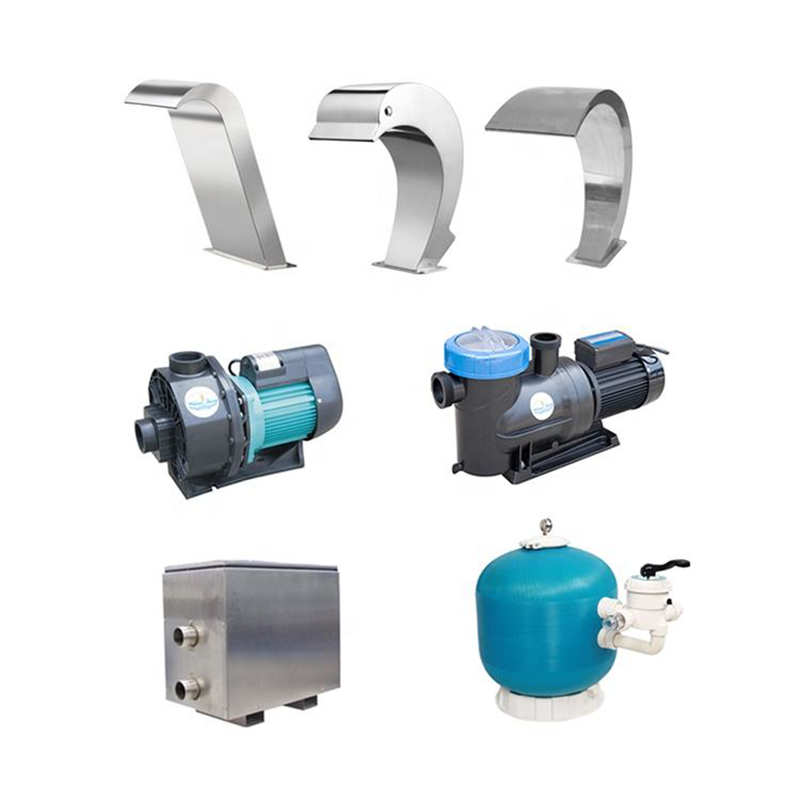
Core Specifications for Sizing and Setup
Hydraulic Calculations and Pump Pairing
Filtration success relies entirely on accurate hydraulic calculations and proper pump pairing. Every filter tank has a maximum designed flow rate. You must match this maximum flow rate with a commercial variable speed pump capable of delivering the exact turnover requirement without exceeding the tank's limits. Pushing water through a filter faster than its design rating forces debris deep into the media bed, degrading water quality and causing permanent channeling.
Operators must calculate the Total Dynamic Head (TDH) of the entire plumbing system. TDH accounts for the friction loss of every pipe, elbow, valve, and heater in the mechanical room. By utilizing Variable Frequency Drives (VFDs) on the circulation pumps, operators dial in the exact flow rate needed to overcome the TDH for normal operation. They can then program the VFD to ramp up the RPMs specifically for the backwash cycle, ensuring optimal hydraulic performance at all times.
Filter Media Selection and Upgrades
The material placed inside the tank dictates the ultimate clarity of the pool water. Proper loading requires a base layer of pea gravel to cover the laterals, followed by the primary filtration media. Silica sand is the traditional baseline for commercial applications. It effectively filters debris down to the 20-40 micron range. Standard sand has a lifespan of about three to five years before the sharp edges wear smooth, reducing its ability to trap fine particulates.
Crushed glass media represents a significant operational upgrade. Manufactured from recycled glass, it carries a slight negative electrical charge that attracts microscopic particles, allowing it to filter down to 5-10 microns. Glass media resists biofilm buildup, preventing the clumping that plagues sand beds, and it lasts up to ten years. Zeolite is another advanced alternative, noted for its highly porous structure and ammonia-absorbing properties. By trapping ammonia, zeolite directly impacts chloramine reduction, helping to eliminate the harsh chlorine smell often associated with indoor resort pools.
Valve Configurations and Automation
Controlling the flow of water through the system requires robust valve configurations. Manual multiport valves are common on smaller commercial tanks up to 3 inches in plumbing diameter. They allow operators to switch between filter, backwash, rinse, and waste modes with a single lever. However, manual operation relies on staff monitoring pressure gauges and executing the backwash cycle at the correct time.
For larger systems requiring 4-inch to 8-inch plumbing, face piping with individual butterfly valves is required. Automated backwash controllers and motorized valve batteries offer a superior solution for hospitality environments. By integrating automated pressure differential sensors, the system continuously monitors the pressure difference between the inlet and outlet. Once the differential reaches a pre-set threshold, the controller automatically initiates the backwash sequence. The system ramps down the pump, actuates the pneumatic or electric valves, ramps the pump back up to backwash speed, runs the cycle, and returns to normal filtration without human intervention.
Capital Expenditure and ROI Factors
Initial Costs vs. Operational Savings
Upgrading aquatic infrastructure requires balancing the initial capital expenditure against long-term operational savings. The initial costs of purchasing and installing commercial-grade fiberglass or steel tanks, along with the associated Schedule 80 PVC plumbing manifolds and automated valves, represent a significant facility investment. Evaluating this purchase solely on the upfront price tag ignores the massive daily consumption of an inefficient pump room.
Modern high-efficiency setups generate continuous savings by drastically reducing utility waste. Advanced media like crushed glass and optimized lateral designs require shorter, less frequent backwash cycles. This directly translates to reduced water replacement costs. Every gallon of water saved is a gallon that does not need to be chemically treated or heated. Lower chemical consumption and decreased heating costs quickly offset the initial equipment investment.
Energy Efficiency and Sustainability Goals
Energy consumption is one of the largest line items in a resort's operating budget. The filtration system plays a massive role in this energy draw. Optimizing the filter surface area directly reduces the TDH of the plumbing system. When you install a larger tank with a greater surface area, the water faces less resistance as it passes through the media bed.
This reduction in TDH allows variable speed pumps to run at lower, more energy-efficient speeds while still achieving the legally mandated turnover rate. According to pump affinity laws, reducing a pump's motor speed by half reduces its electrical consumption by nearly 87%. Running a pump at a lower RPM exponentially decreases electrical draw, helping hospitality brands meet aggressive corporate sustainability goals while slashing monthly utility bills.
Implementation Realities and Risk Mitigation
Pump Room Footprint and Access Constraints
Retrofitting equipment in an existing hotel presents unique logistical challenges. Pump rooms are often located in basements, sub-levels, or tight mechanical spaces designed decades ago. Moving large commercial tanks, which frequently range from 36 inches to over 96 inches in diameter, through standard 36-inch doorways, narrow corridors, or down steep stairwells is often the most difficult phase of the project.
Facility managers must plan mitigation strategies well before the equipment arrives on site. If a single massive tank cannot fit through the access points, utilizing horizontal multi-tank configurations is a highly effective alternative. Installing two or three smaller tanks plumbed in parallel provides the exact same total filtration surface area and GPM capacity as one large tank, while easily passing through standard double doors. Some manufacturers also offer field-wound fiberglass tanks or on-site welding for steel vessels directly inside the mechanical room.
Site Preparation and Plumbing Assembly
The physical weight of commercial aquatic equipment is staggering. A 72-inch fiberglass tank filled with water and thousands of pounds of wet sand exerts immense downward pressure. It is an absolute necessity to pour a 4-inch to 6-inch reinforced concrete housekeeping pad capable of supporting this massive operating weight. Installing a tank on an uneven or structurally weak surface will cause the vessel to lean, stressing the plumbing connections and potentially causing catastrophic tank failure.
Plumbing assembly requires meticulous attention to detail. The critical steps of piping assembly include the proper alignment of the face piping. Any misalignment forces the Schedule 80 PVC pipes into a bind. Over time, the constant vibration of the circulation pumps will exploit this plumbing stress, leading to hairline fractures and severe pump room leaks. Utilizing vibration-dampening flexible couplings, flange connections, and proper pipe supports ensures the manifold remains secure and leak-free under high-pressure operation.
Phased Installation and Minimizing Disruption
Executing a commercial retrofit requires a strict project timeline to minimize disruption to the guest experience. A standard project timeline involves draining the old equipment, cutting out the legacy plumbing, extracting the old tanks, preparing the concrete pad, positioning the new vessels, gluing the new manifold, loading the media, and curing the plumbing joints before pressure testing.
To maintain guest access to aquatic amenities, facilities should employ strategic scheduling. This often means scheduling the heavy demolition and installation work during off-peak seasons or executing the retrofit during overnight shifts. By coordinating closely with commercial plumbing contractors to build bypass loops, a well-planned phased installation can often be completed with minimal daytime closures, protecting the resort's reputation and revenue streams.
Selecting a Reliable Pool Sand Filter Supplier
Vetting Manufacturer Track Records
The source of your equipment dictates its reliability. When evaluating a pool sand filter supplier, facility directors must examine the manufacturer's history in the hospitality and commercial aquatics sector. A proven track record of supplying high-bather-load environments indicates that their tanks are engineered to withstand the continuous, high-pressure demands of a resort setting.
NSF/ANSI Standard 50 certification is an absolute requirement for commercial applications. This independent certification guarantees that the equipment has undergone rigorous burst pressure testing, cyclic fatigue testing, and chemical resistance evaluations. For steel tanks, ASME Boiler and Pressure Vessel Code compliance is also standard. Installing non-certified equipment risks mechanical failure and will result in immediate shutdown orders from local health inspectors.
Warranties, Parts Availability, and Technical Support
Even the most robust systems require eventual maintenance. A standard commercial warranty should provide comprehensive coverage for the structural integrity of the tank shell for 5 to 10 years, along with 1-year coverage on internal laterals, bottom manifolds, and valve assemblies. Facility managers must read the fine print to understand what voids the warranty, such as improper media loading or exceeding maximum pressure ratings.
The operational risk of choosing obscure brands is severe. If a lateral cracks or a bulkhead seal fails, you need replacement parts immediately. Partnering with a supplier that maintains strong domestic supply chains ensures that replacement parts are shipped overnight, rather than waiting weeks for overseas freight. Reliable technical support and immediate parts availability prevent extended pool closures.
Conduct a comprehensive hydraulic audit of your current pump room to determine the exact GPM, TDH, and turnover rate capabilities.
Consult with a certified commercial aquatics engineer to verify local health department requirements before purchasing new equipment.
Measure all pump room doorways, stairwells, and access paths to determine the maximum physical dimensions for new tank delivery.
Evaluate the structural integrity of your current concrete equipment pad to ensure it can support the wet weight of modern commercial tanks.
Request detailed warranty documentation and replacement part lead times from your shortlisted equipment suppliers.
FAQ
Q: What is the lifespan of a commercial pool sand filter tank?
A: Commercial-grade fiberglass or epoxy-coated steel tanks typically have a life expectancy of 15 to 25 years under normal operating conditions. This structural lifespan is entirely separate from the filter media inside, which requires much more frequent replacement. Proper winterization and maintaining correct operating pressures will maximize the tank's longevity.
Q: How often should a hotel pool filter system be backwashed?
A: Backwashing should be dictated by pressure, not a set calendar schedule. A system requires backwashing when the pressure gauge reads 10 to 15 psi higher than the clean starting pressure. In high-bather-load resort environments, this pressure differential may be reached every few days, whereas quieter pools may go weeks between cycles.
Q: How often does commercial sand filter media need to be replaced?
A: Standard silica sand typically requires replacement every 3 to 5 years, as the sharp edges wear down and lose filtration efficiency. Advanced media, such as activated crushed glass, resists channeling and biofilm buildup, allowing it to last up to 10 years even in demanding, high-bather-load commercial environments.
Q: Can I upgrade my existing commercial filtration equipment with glass media?
A: Yes, glass media is highly compatible with existing sand filter tanks. The upgrade process involves vacuuming out the old silica sand, thoroughly inspecting the internal manifold and laterals for cracks, and carefully loading the new glass media according to the manufacturer's specific depth and weight requirements.
Q: What is the difference between residential and commercial pool sand filters?
A: Commercial filters are engineered with thicker fiberglass or steel walls, heavy-duty internal laterals, and larger plumbing bulkheads to handle massive flow rates and continuous operation. Most importantly, commercial units must carry NSF/ANSI Standard 50 certification to legally operate in public or hospitality environments.
Q: How do I calculate the correct filter size for a resort pool?
A: First, calculate the required flow rate: divide the total pool volume by the required turnover hours mandated by code, then divide by 60 to find the Gallons Per Minute (GPM). Next, match that GPM requirement to a filter tank that offers enough surface area to handle the flow without exceeding its maximum design velocity.


