Piecemeal purchasing of pool supplies often leads to frustrating hardware incompatibility. Operators face inefficient chemical use daily. They also suffer highly unpredictable maintenance labor costs. Equipment mismatch forces maintenance teams to work harder instead of smarter. Whether you manage a large facility or upgrade a high-end residential pool, standardizing daily tools matters deeply. It represents a critical operational decision rather than just a quick retail purchase. A unified approach eliminates the daily friction of forcing mismatched components together. Transitioning to a cohesive Full Set Swimming Pool Equipment system guarantees predictable water chemistry. It drastically reduces equipment downtime. It also optimizes long-term procurement budgets. You gain absolute control over water quality. You ensure strict facility safety standards. We will explore exactly what components build this system. We will also examine why integrated procurement drives operational success.
Key Takeaways
A standardized equipment set prevents compatibility issues between filtration, chemical balancing, and manual cleaning tools.
Evaluating equipment based on material durability (UV and chemical resistance) is more cost-effective than optimizing for upfront retail price.
Sourcing through swimming pool equipment wholesale channels drastically reduces total cost of ownership for commercial operators and contractors.
Consolidated procurement from established manufacturers ensures reliable access to proprietary replacement parts and technical support.
The Operational Risks of Fragmented Maintenance Tools
Fragmented maintenance setups create massive operational headaches. Mismatched equipment introduces hidden financial drains daily. An undersized pump struggles to push water through filtration media. This constraint stresses the motor. It ultimately degrades water clarity. Incompatible vacuum hoses lose crucial suction power during operation. Maintenance teams spend double the required time cleaning the floor.
We observe three distinct failure points in mismatched systems:
Hydraulic Imbalance: An undersized pump cannot push enough water through a large filter tank.
Suction Loss: Incompatible vacuum hoses lose pressure during floor cleaning routines.
Chemical Inefficiency: Poor circulation causes concentrated chlorine pockets, wasting expensive sanitizers.
We frequently observe the compounding costs of mismatched equipment. Operators often buy replacement parts from different brands. This practice creates a chaotic system. A weak pump cannot support a high-capacity filter. A cheap skimmer net breaks under heavy wet leaf loads. These small failures add up quickly. They drain your maintenance budget month after month.
A successful daily maintenance toolkit delivers specific, measurable results. You want predictable labor hours every single week. You expect minimal chemical waste during routine balancing. Commercial pools demand absolutely zero compliance failures during health inspections. You achieve these goals only through proper system integration. A unified system eliminates guesswork completely.
Upgrading an entire system requires an initial capital outlay. Some operators hesitate at this upfront expense. However, this investment pays off rapidly. You experience significantly fewer emergency service calls. Your asset lifespans extend by several years. A unified system prevents the cascading failures common in piecemeal setups. You stop replacing the same cheap parts repeatedly.
Core Components of a Full Set Swimming Pool Equipment
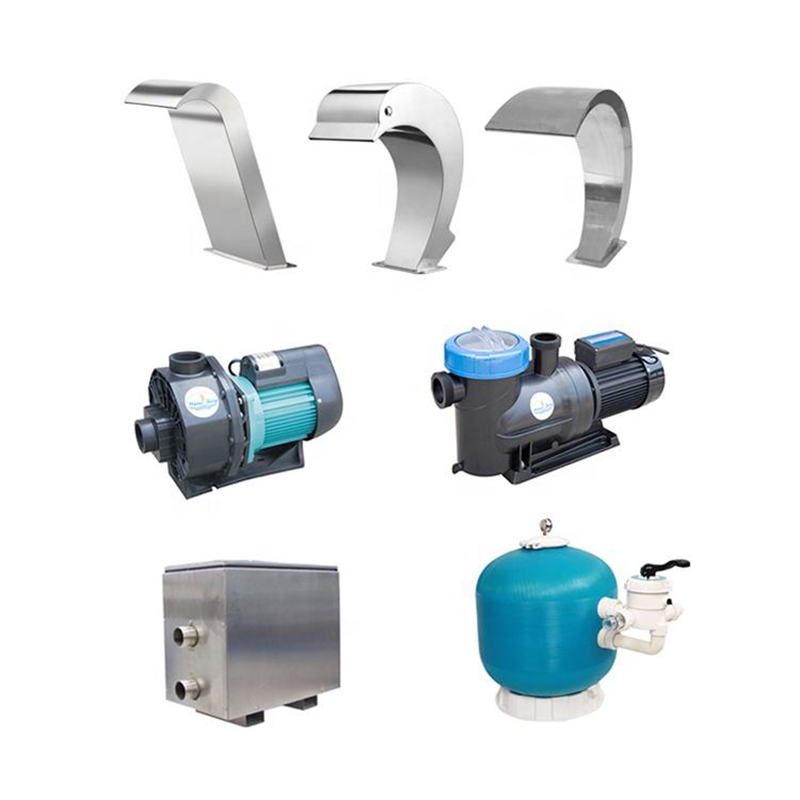
The foundation of water health relies on unified hardware. Every component must communicate seamlessly. We categorize these essential tools into three main pillars.
Filtration and Circulation Backbone
Water circulation acts as the heartbeat of your facility. High-efficiency variable speed pumps drive this vital process. They push water continuously through properly sized filters. You might choose sand, cartridge, or diatomaceous earth filters. We outline the common filter types below:
Sand Filters: These require minimal maintenance. They trap debris effectively for large commercial pools.
Cartridge Filters: These conserve water by eliminating backwashing. They offer excellent micron-level filtration.
Diatomaceous Earth Filters: These provide the highest clarity possible. They capture microscopic particles easily.
Without robust circulation, manual cleaning becomes completely futile. Stagnant water breeds algae rapidly. A strong backbone ensures chemicals distribute evenly across the entire volume. This prevents isolated cloudy patches in deep ends.
Daily Pool Cleaning Equipment
Your team needs reliable physical tools for surface maintenance. Daily pool cleaning equipment includes heavy-duty telescoping poles. You also need commercial-grade leaf skimmers and specialized wall brushes. We recommend nylon and stainless steel hybrid bristles for concrete surfaces. Manual or robotic vacuum heads handle floor debris efficiently.
Structural integrity matters immensely here. Reinforced aluminum poles withstand daily torque much better than cheap plastics. They resist constant chemical exposure without snapping. Flimsy retail nets tear after a few weeks of heavy use. Commercial-grade netting survives entire seasons effortlessly. You must prioritize structural strength over low initial prices.
Diagnostic and Chemical Balancing Tools
Guesswork has no place in water chemistry management. You need professional-grade DPD test kits instead of basic test strips. Automated chemical feeders dose chlorine precisely throughout the day. Digital water quality monitors provide real-time feedback on pH levels. Accurate data prevents costly over-chlorination. It also stops surface scaling before it ruins the plaster.
Consider the daily routine of chemical testing. A reliable DPD kit shows exact free chlorine levels. Test strips often provide vague color ranges. Vague data leads to poor chemical dosing decisions. Poor dosing creates cloudy water and irritates swimmers' eyes.
Essential Hardware Categories | System Category | Core Tools Required | Primary Function |
| Filtration & Circulation | Variable speed pump, media filter, PVC valves | Moves water, removes suspended solids, distributes chemicals evenly. |
| Physical Cleaning | Skimmer nets, brushes, telescoping poles, vacuum heads | Removes large debris, prevents algae adherence to walls. |
| Chemical Diagnostics | DPD test kit, digital monitors, automated feeders | Measures water chemistry accurately, dispenses sanitizers efficiently. |
Evaluation Criteria: Separating Commercial Grade from Retail
Not all pool supplies deliver the same longevity. Commercial grade tools outlast retail alternatives significantly. You must learn how to identify true quality.
Material Durability & Chemical Resistance
You must audit equipment specifications carefully. Look for UV-stabilized resins in plastic components. Sun exposure destroys untreated plastics in mere months. It turns them brittle and chalky. Corrosion-resistant alloys prevent rust in harsh environments. We strongly suggest 316L stainless steel for ladders and rails. This grade withstands high chlorine and salt concentrations easily.
Pay close attention to material thickness. Commercial skimmers feature thicker plastic frames. They survive accidental drops onto concrete pool decks. Retail versions shatter instantly upon impact. You save money by buying durable plastics once.
Interoperability
A unified system relies heavily on interoperability. You need standardized fittings across all hardware. Consistent hose diameters prevent frustrating suction leaks. Quick-connect systems allow staff to swap tools instantly. These small details reduce daily friction for your maintenance crew.
Imagine switching from a brush to a vacuum head. If the pole attachments do not match, work stops immediately. Operators waste time modifying connections. Standardized interoperability keeps the maintenance workflow moving smoothly.
Scalability & Maintenance Risks
Evaluate the repairability of your chosen tools. You must assess maintenance risks before purchasing. Equipment requiring custom, hard-to-find parts introduces unacceptable downtime. You need tools serviced easily using standard replacement parts. Scalable systems grow alongside your facility needs.
Consider what happens during a pump failure mid-summer. If you own a proprietary retail pump, parts might take weeks to arrive. A standardized commercial pump uses widely available seals and impellers. Your local technician fixes it the same day.
The Economics of Swimming Pool Equipment Wholesale Procurement
Procurement strategies directly impact your bottom line. Retail purchasing drains operational budgets over time. You must shift your purchasing mindset completely.
Cost-to-Outcome Ratio
Analyze the financial logic behind your purchases. Buying an integrated set via wholesale makes better financial sense. It avoids the trap of cyclical retail purchasing. Retail markups eat into your operational margins quickly. Wholesale procurement delivers a vastly superior cost-to-outcome ratio. You secure higher quality gear for substantially less money.
You measure success by the lifespan of the tool. A retail brush costs less today. It fails in three months. A wholesale commercial brush costs slightly more initially. It lasts two full years. The long-term math clearly favors the commercial option.
Supply Chain Consistency
Supply chain consistency mitigates severe operational risks. You want a single point of contact for warranties. This vendor should handle bulk chemical procurement. They must supply emergency replacement parts rapidly. Relying on multiple suppliers causes massive administrative headaches. One reliable partner streamlines your entire maintenance program.
A fractured supply chain leads to delayed openings. You might receive chlorine from one vendor and pumps from another. If one shipment delays, your facility remains closed. Consolidated supply chains ensure everything arrives together.
Procurement Model Comparison | Factor | Retail Purchasing | Wholesale Procurement |
| Initial Unit Price | Often higher due to retail markup | Lower bulk pricing |
| Equipment Grade | Light-duty, shorter lifespan | Heavy-duty, commercial grade |
| Warranty Support | Handled by third-party retailers | Direct-to-manufacturer support |
| Parts Availability | Unpredictable, prone to out-of-stocks | Consistent, scheduled inventory access |
Target Audience Application
Facility managers and contractors need reliable equipment margins. Pool service startups rely on predictable hardware costs. They must utilize wholesale channels to maintain profitability. Retail prices simply cannot support a growing service business. Wholesale access ensures you stay competitive in a tight market.
Contractors bidding on large projects need volume discounts. They cannot win bids using retail hardware prices. Wholesale relationships empower them to offer competitive quotes. Facility managers use these savings to fund other upgrades.
Vendor Shortlisting: The Advantage of Factory-Direct Solutions
Choosing the right manufacturing partner dictates your success. You must evaluate global suppliers rigorously. Not all factories produce the same quality level.
Evaluating Manufacturer Capabilities
Look for verifiable ISO certifications first. These prove a strict commitment to quality management. Demand rigorous pre-shipment quality control protocols. Robust research and development indicates a forward-thinking company. They will provide modern, energy-efficient solutions.
A capable manufacturer tests every pump before boxing it. They inspect filter tanks for micro-fractures. You want a supplier who catches defects at the factory. You do not want to discover defects during installation.
Case for Standardization
Standardization eliminates the stressful guesswork of compatibility. Sourcing a unified system from Guangdong Fenlin Swimming Pool guarantees flawless integration. Every pump, filter, and fitting matches perfectly. You never worry about mismatched threads or incompatible voltages. This unified approach saves countless hours during installation.
Factory-direct standardization means the engineers designed the components together. The pump perfectly matches the filter's maximum flow rate. The chemical feeder integrates smoothly into the return line. This harmonious design extends the life of every single part.
Evidence of Reliability
Fenlin offers massive factory-direct advantages. They adhere strictly to international safety standards. Their engineers provide deep customization capabilities for commercial projects. You receive transparent warranty structures directly from the factory. Factory-direct solutions remove middlemen entirely. You gain direct access to expert technical support.
Reliability comes from holding the manufacturer accountable. When you buy direct, you speak to the creators. They understand their products intimately. They troubleshoot issues faster than any retail clerk ever could.
Conclusion
Daily pool maintenance functions primarily as an exercise in system management. The quality of your toolkit dictates the clarity of your water. It directly impacts the lifespan of your pool infrastructure. Piecemeal solutions simply cannot deliver consistent, commercial-grade results. You must embrace a unified hardware strategy.
Take action today by auditing your current maintenance inventory. Look closely for signs of severe wear-and-tear. Identify any mismatched components causing daily friction. Request a comprehensive wholesale catalog from a trusted manufacturer. Calculate the return on investment of upgrading to a unified equipment set. You will quickly see the operational and financial benefits. A standardized system makes daily maintenance predictable, efficient, and far less stressful.
FAQ
Q: What is the minimum pool cleaning equipment needed for daily maintenance?
A: You need a few bare essentials for daily upkeep. Begin by utilizing a commercial-grade leaf skimmer to remove surface debris. Add a heavy-duty wall brush to prevent algae buildup. You must have a reliable DPD test kit for accurate chemical readings. Finally, include a manual or robotic vacuum system for floor cleaning. These core tools ensure safe, clear water.
Q: How often should I replace manual pool maintenance tools?
A: Replacement timelines vary based on usage and UV exposure. Commercial operators should replace nylon brushes and skimmer nets annually. High-end residential owners might stretch this to two years. Telescoping aluminum poles usually last three to five years. Always replace tools immediately if you notice cracked plastics or frayed bristles to avoid pool surface damage.
Q: What are the benefits of buying swimming pool equipment wholesale?
A: Wholesale purchasing offers significant volume pricing advantages. You secure consistent parts for your entire maintenance fleet. This eliminates interoperability issues across different sites. You also gain direct-to-manufacturer warranty benefits. Factory-direct relationships ensure priority access to technical support and emergency replacement parts. This protects your operational budgets effectively.
Q: Are universal parts compatible with all full set swimming pool equipment?
A: Universal parts rarely fit perfectly. Aftermarket components often introduce severe risks like suction leaks or pressure drops. Manufacturer-matched components guarantee exact thread alignment and hose sizing. Sticking to proprietary parts protects your warranty status. It ensures your filtration and cleaning tools operate at peak efficiency without unexpected failures.


