Picture stepping into your backyard on a sweltering July afternoon. You fully expect to dive into a pristine, crystal-clear oasis. Instead, you face dull, cloudy water that resembles a murky pond. This sudden drop in water clarity is a frustrating reality for many pool owners. As a field technician, I see this scenario daily, and it almost always points to a single localized issue: your sanitation equipment is choked.
At the very heart of your saltwater pool system lies the Salt Water Chlorinator. When this vital component becomes clogged by hardened mineral deposits, your pool's primary defense against bacteria and algae halts completely. Calcium accumulation acts as a physical barrier. It stops the system from generating the sanitizer your water desperately needs.
In this comprehensive guide, we will explore the objective warning signs of equipment failure. You will learn a safe maintenance routine that protects delicate internal hardware. Furthermore, we will share proactive strategies to keep your pool sparkling without constant manual labor.
Key Takeaways
Visual Inspections are Crucial: Field maintenance standards dictate inspecting your equipment every three months. Alternatively, check the housing after 500 hours of active use to identify the early stages of white, flaky calcium buildup.
Watch for Warning Signs: A sudden drop in sanitizer levels, persistent cloudy water, or an active diagnostic dashboard light are primary technical indicators. These signs mean a maintenance procedure is likely overdue.
Avoid Over-Cleaning: Chemical washing inherently strips the microscopic rare-earth coating on titanium plates. Initiate a cleaning protocol only when visible scale physically obstructs the unit to prevent premature hardware degradation.
Safety First: Always disconnect the main power breaker before removing plumbing components. Utilize the mildest mechanical removal method first, like a high-pressure water hose, before resorting to corrosive muriatic acid.
Prevention Saves Money: Maintaining rigorous water chemistry balance reduces the frequency of manual interventions. Specifically targeting pH and calcium hardness extends the operational lifespan of your sanitation system.
What is a Salt Water Chlorinator and How Does the Electrolytic Cell Work?
To truly grasp why maintenance is inescapable, we must look at the underlying mechanics of saltwater pool sanitation. A modern chlorination system is an advanced piece of equipment designed to convert dissolved sodium chloride into active hypochlorous acid. This electrolysis process eliminates the tedious chore of manually lugging heavy jugs of liquid chlorine.
At the center of this chemical reaction is the Electrolytic Cell. Mildly salted pool water flows through the plastic housing and passes over parallel titanium plates. The main control board electrically charges these plates. They are meticulously coated with rare-earth metals like ruthenium or iridium to facilitate the electrical transfer. Current passing through the saltwater solution generates pure chlorine gas. This gas immediately dissolves, oxidizing organic contaminants and sanitizing the pool.
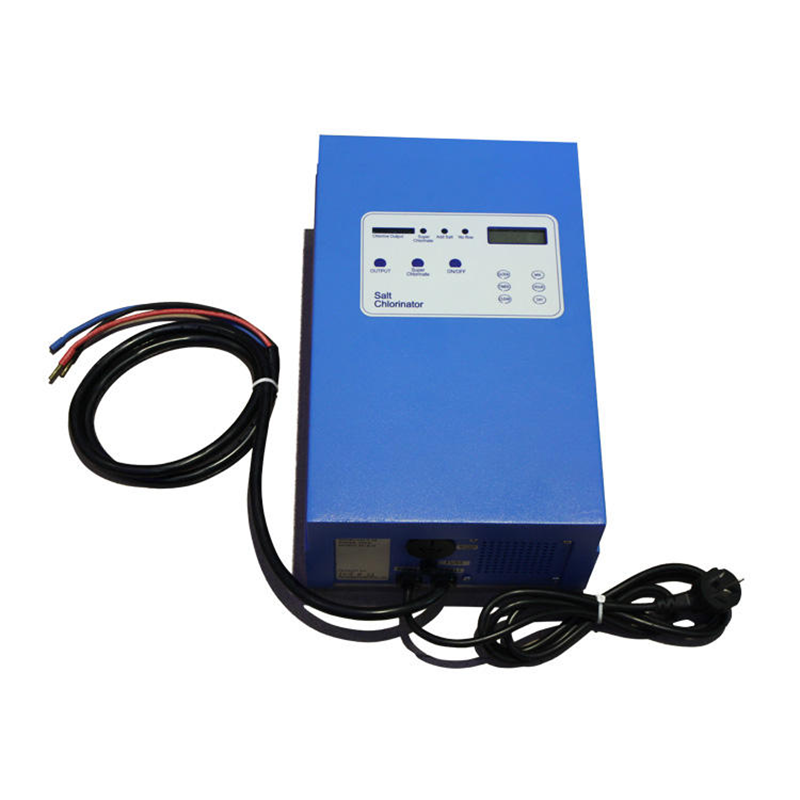
For instance, advanced intelligent units operate efficiently at an optimal salt level of 3200 ppm and utilize self-cleaning reverse polarity technology. They are engineered to handle varying pool volumes while maintaining a steady sanitizer output.
However, this highly effective electrolysis process produces a localized byproduct. The reaction naturally creates a high-pH and high-heat micro-environment directly at the surface of the negatively charged titanium plate. Calcium carbonate becomes significantly less soluble as pH and temperature rise. Consequently, dissolved calcium precipitates out of the liquid state. This forms a hard, crusty mineral deposit directly on the metal plates. Modern systems deploy clever software to mitigate this buildup, but the physical reality of calcium precipitation is exactly why routine monitoring remains non-negotiable.
5 Telltale Signs Your Equipment Needs Attention
Relying on guesswork for equipment maintenance often leads to two expensive extremes. You either face premature wear from over-cleaning or catastrophic sanitation failure from sheer neglect. Here are the objective triggers indicating it is time to grab your tools and intervene.
Visible Calcium Accumulation
The most definitive indicator that maintenance is required is visual confirmation. Carefully unscrew the PVC unions, remove the unit, and peer inside the housing. Look for a white, chalky buildup. In early stages, this Scaling appears as a light, powdery dusting on the edges of the titanium plates. In advanced neglect, hardened minerals physically bridge the narrow gaps. This restricts both water flow and electrical conductivity. If the plates retain their dark metallic hue, simply reinstall the unit.
Drastic Drop in Sanitizer Production
Calcium scale is an exceptionally effective electrical insulator. When the titanium plates become coated in this mineral crust, the electrical current cannot make direct contact with the flowing saltwater. The electrolysis reaction slows down dramatically. You might notice a severe drop in free chlorine levels during weekly water testing, even if the control panel reads 100 percent capacity. If your pool consumes chlorine faster than the system produces it, scale insulation is the most likely culprit.
The Diagnostic Warning Light
Modern sanitation systems utilize electrical resistance to calculate the salinity of the pool water. The system knows the exact voltage sent and measures the returning amperage. It calculates salt concentration based on overall conductivity. However, scale buildup artificially spikes internal electrical resistance. The control board misinterprets this increased resistance as a lack of salt. It then triggers a false warning light on your dashboard.
Cloudy Water or Green Pool Onset
Sanitation failure is frequently the very first symptom noticed by busy pool owners. If the system fails to produce hypochlorous acid, the protective residual barrier drops to zero. Microscopic organic matter and algae spores multiply exponentially. Within days, the water loses its crystalline clarity and turns murky. Left unaddressed, this escalates into a full-scale algae bloom.
Reduced Water Flow and Hydraulic Strain
Prolonged neglect allows calcium deposits to grow thick enough to cause severe physical blockages. The gap between titanium plates is narrow to ensure efficient electrical transfer. When scale bridges these gaps entirely, it acts as a concrete wall. This heavily restricts the flow rate of your filtration system. It can trigger flow error codes and force your variable speed pump to work dangerously hard.
Industry Trends: The Shift Towards Smart Monitoring and Preventative Maintenance
In recent years, the residential pool care industry has witnessed a massive shift toward automation. Market data shows a growing consumer demand for smart water monitoring integrated directly into chlorination systems. Pool owners are increasingly investing in app-connected control centers that track salinity, temperature, and pH in real-time. These smart systems send push notifications the moment electrical resistance spikes. This theoretically takes the guesswork out of maintenance schedules.
Manufacturers are continuously refining reverse polarity algorithms. This allows chlorinators to swap electrical currents more efficiently, shedding microscopic scale before it hardens. Despite these impressive technological leaps, field data confirms a humbling reality. Software cannot defeat the physical laws of chemistry. High calcium hardness and fluctuating pH will always lead to precipitation. While smart trends drastically reduce daily labor, the physical inspection of internal plumbing components remains an irreplaceable best practice for equipment longevity.
How Often Should You Perform Routine Inspections?
A costly misconception among pool owners is that equipment should be chemically washed on a strict calendar schedule. This approach actively damages the hardware. The golden standard among water engineers is a visual-only rule. You should physically inspect the hardware regularly, but only perform an acidic wash if there is undeniable visual obstruction.
During peak summer months, water temperatures soar. The system runs at maximum output to combat heavy bather loads. Visual inspections should occur every two months. Heat naturally accelerates mineral precipitation. During the off-season, inspecting the unit at the formal opening and closing of the pool is generally sufficient.
Many contemporary units feature self-cleaning technology. They periodically reverse the electrical current direction. This rapid shift physically flakes off newly formed scale. While reverse polarity delays the inevitable, owners of self-cleaning models must still perform manual visual checks every three to four months.
The Dangers of Ignoring Scale Buildup
Ignoring routine inspections carries significant financial consequences. The dangers extend far beyond dealing with a dirty pool. When scale insulates the plates, the main control board must push increasingly higher voltages. It struggles to achieve the targeted amperage required for chlorine production. This forces the entire system to run significantly hotter than designed.
Excess thermal stress can literally warp the titanium plates. It degrades the delicate ruthenium coating and eventually melts capacitors on the main circuit board. A well-maintained unit is built to last five to seven years. A neglected one can suffer catastrophic failure in less than two. Furthermore, damage caused by severe calcium impaction is not considered a manufacturing defect. Diagnostic technicians easily identify scale-induced overheating, instantly voiding the warranty.
How to Clean a Salt Cell Without Damaging It
If your visual inspection confirms hardened calcium, you must execute a proper maintenance routine. The critical objective is to dissolve the scale using the least aggressive method possible. Harsh tools will permanently strip the rare-earth metals, irreversibly ruining the unit.
Step 1: Disconnect the Power Source
Safety is paramount when handling wet pool equipment. Never unscrew plumbing unions while the system receives live electrical current. Switch off the power to both the pool pump and the chlorinator control board at your main breaker panel. This prevents accidental electrocution and ensures the pump does not unexpectedly surge to life.
Step 2: Remove and Inspect the Housing
Carefully unscrew the threaded PVC unions at both ends. Disconnect the communication data cable. Pull the unit away from the plumbing line and inspect the interior plates under good lighting. Check the rubber O-rings. If they look flattened or dry-rotted, replace them immediately to prevent air leaks. If there is no visible white scale, reinstall the unit and walk away.
Step 3: The Mechanical Water Method
Always attempt mechanical removal with basic water pressure first. Attach a high-pressure nozzle to a standard garden hose. Spray water directly through the narrow gaps in the titanium plates. This pressurized stream is often sufficient to dislodge loose, flaky scale. Never use metal screwdrivers or stiff wire brushes. Scratching the titanium plates permanently destroys their conductivity.
Step 4: The Mild Acid Wash Protocol
If the hose fails, you must perform a mild acid wash. You will need a specialized plastic cleaning stand, protective safety eyewear, acid-resistant gloves, and standard pool-grade muriatic acid. Prepare the solution using a safe ratio of one part muriatic acid to four parts clean water. Always add the acid into the water to prevent a violent exothermic reaction.
Stand the unit upright and carefully pour the diluted mixture into the housing. You will notice vigorous bubbling as the acid reacts with the alkaline calcium carbonate. Allow the solution to soak for roughly ten minutes. Once bubbling stops, the scale is dissolved. Dispose of the spent acid safely and thoroughly flush the unit with fresh water. The primary goal of Cell Cleaning is restoration, not complete sterilization.
Expert Tips to Prevent Rapid Scaling and Reduce Cleaning Frequency
The most effective way to manage your sanitation system is preventing scale from forming in the first place. Intelligent maintenance preserves the integrity of the titanium plates.
Mastering your water chemistry is the first line of defense. The Langelier Saturation Index dictates the rate of calcium precipitation. To keep calcium fully dissolved, strictly maintain your pH levels between 7.4 and 7.6. A pH drifting above 7.8 exponentially accelerates precipitation directly at the cathode. Keep your calcium hardness strictly between 200 and 400 parts per million.
Ensure your system's reverse polarity feature is optimized. Advanced control boards allow you to adjust the reversal interval. If you live in a region with hard municipal water, adjusting the setting to reverse more frequently helps mitigate rapid buildup.
For pools struggling with chronic calcium issues, utilizing a liquid scale inhibitor is highly recommended. These sequestering agents chemically bond with suspended calcium molecules. Pouring a maintenance dose into the skimmer monthly is a highly cost-effective measure.
Clean vs. Replace: When is the Electrolytic Cell Dead?
Reaching the decision stage requires an objective evaluation of the hardware. Many owners mistakenly assume a drop in sanitation efficiency just means the unit needs an acid wash. Like any mechanical component exposed to constant electrical currents, the hardware has a finite lifespan.
Two primary factors consume the precious catalytic coating. These are continuous electrical current and harsh acidic environments during routine maintenance. Once the ruthenium-iridium layer strips away, bare titanium is exposed. The unit loses its ability to conduct current, and the hardware is technically dead.
Visual and Technical Indicators of Failure
The most definitive sign of a dead cell is a persistent lack of Chlorine Output after a confirmed cleaning. If you reinstalled a perfectly clean unit, balanced your chemistry, and sanitizer levels remain at zero, the coating is depleted. Inspect the plates. A functional plate exhibits a matte black or dark grey finish. If plates appear shiny, silver, or physically warped, the coating has eroded.
Empirical data indicates a well-maintained unit lasts approximately 10,000 operational hours. For an average backyard pool, this translates to five to seven years.
Diagnostic Matrix and Selection Guide
When replacement is inevitable, matching the right specifications to your pool volume is critical. Intelligent chlorinators offer varying outputs. A 15g/h unit suits smaller setups, while 20g/h, 30g/h, or even 50g/h models are engineered for larger inground pools. Selecting a unit with a slightly higher output capacity than your pool strictly requires allows you to run the system at a lower percentage. This drastically extends the life of the titanium plates.
| Observed Symptom |
Water Chemistry Status |
Hardware Inspection |
Recommended Action |
| Low Sanitizer Production |
Balanced (Salinity 3200 ppm) |
Heavy white minerals bridging the plates. |
Perform a standard, mild acid wash. |
| Low Sanitizer Production |
Balanced (Salinity 3200 ppm) |
Plates are completely clean, no visible scale. |
Replace the hardware; the internal coating is depleted. |
| "Low Salt" Warning |
Verified Low (Under 2500 ppm) |
Plates are perfectly clean. |
Add the required bags of salt to the pool. |
| "Low Salt" Warning |
Verified Optimal (3200 ppm) |
Plates are clean and over 5 years old. |
Replace the hardware; high electrical resistance detected. |
| No Power to Unit |
Balanced |
Control board shows zero voltage output. |
Inspect the main control board and transformer. |
Advanced Considerations for Equipment Longevity
To maximize the lifespan of your investment, you must understand environmental variables that accelerate degradation. High calcium hardness combined with soaring summer water temperatures pushes the Langelier Saturation Index into a highly scale-forming state. This happens even if the pH is technically within acceptable ranges.
Rapid precipitation forces frequent, aggressive acid washes. Every single acid wash strips a microscopic fraction of the ruthenium coating. Maintaining a slightly negative to neutral LSI significantly reduces the frequency of manual interventions.
Conclusion
Checking your sanitation equipment for mineral buildup is a quick, straightforward job. This preventative maintenance prevents expensive part replacements and stops frustrating algae issues before they take hold.
Remember the golden rule. Only clean the unit when absolutely necessary to restore proper water flow. When you do clean it, use the mildest mechanical or chemical method available. Maintaining pristine water chemistry is your greatest shield. Make it a habit to inspect your system, and if your diagnostic checks reveal that your current equipment is beyond saving, it is time to upgrade. Explore advanced, self-cleaning Intelligent Salt Chlorinators to ensure your pool remains crystal clear with minimal maintenance.
FAQ
Can I use vinegar to clean my salt water chlorinator cell?
Yes, cleaning vinegar is a highly recommended, non-damaging alternative to traditional muriatic acid. Vinegar is a dilute form of acetic acid. It is significantly milder and less aggressive than commercial pool chemicals. It takes longer to dissolve heavy calcium deposits, often requiring an overnight soak. However, it is much safer for the delicate ruthenium coating.
Why is my equipment scaling up so quickly?
Rapid calcium precipitation is dictated by your pool's overall water chemistry. When your pH, total alkalinity, or calcium hardness levels exceed recommended maximums, the water loses its ability to keep calcium dissolved. The electrolysis process creates a localized pocket of high heat and high pH. The unit becomes the first place excess calcium solidifies.
Does cleaning the salt cell degrade it?
Yes, it fundamentally does. Every time you submerge the unit in an acidic solution, the acid attacks the microscopic layer of rare-earth metals baked onto the plates. Repeated washings completely strip this catalytic coating.
How long does a salt water chlorinator cell last?
Under optimal conditions, a high-quality unit is engineered to last between 10,000 and 12,000 operational hours. This equates to an operational lifespan of five to seven years for a standard residential swimming pool.
Can I rebuild or recoat a depleted electrolytic cell?
From a practical standpoint, the answer is no. Re-applying ruthenium and iridium oxides requires highly specialized electroplating equipment and hazardous chemicals. There are no reliable consumer-level kits available. The cost of commercial recoating typically exceeds the price of purchasing a brand-new replacement unit.
Will increasing the salt concentration force an old unit to produce more chlorine?
No, adding excess bags of salt beyond the recommended limit will not magically revive a depleted unit. A failing unit often triggers a false low salt warning due to increased internal electrical resistance. Overloading the water with sodium chloride does not fix the underlying lack of catalytic coating.
What happens if you leave muriatic acid in a salt cell too long?
Leaving a highly concentrated acid solution inside the housing for extended periods is disastrous. It rapidly eats through the ruthenium and iridium coating, exposing the bare titanium beneath. Once the titanium is exposed, the unit can no longer conduct electricity efficiently and is permanently ruined. Never exceed a 15-minute soak time.
Can a dirty salt cell cause low flow?
Absolutely. As calcium carbonate builds up, it forms physical bridges between the tightly spaced metal plates. In severe cases, this mineral crust acts like a concrete plug inside your plumbing line. It drastically restricts the flow rate, causing your pool pump to strain and triggering flow error codes on your control panel.


