Tired of finding expensive filter sand or glass media scattered across the bottom of your pool? Perhaps you are seeing it blown out into your yard. Your pool filtration system acts as the heart of your backyard oasis. The multiport valve serves as its steering wheel. This crucial component is engineered to clean and maintain water clarity. However, using the wrong setting—or executing the right setting incorrectly—can literally flush your maintenance budget down the drain.
In this field-tested engineering guide, we will uncover exactly which settings cause filter media loss. We will explore how mechanical failures contribute to the problem and detail how to operate your equipment flawlessly to protect your investment.
Key Takeaways
The Backwash Setting: This primary function actively wastes filter media if the water flow is too aggressive or the filter tank is overfilled.
Skipping the Rinse Setting: Failing to utilize the rinse cycle immediately after cleaning is the leading operational error blowing sand back into the swimming pool.
The Spider Gasket Threat: A flattened or torn rubber gasket inside the valve housing causes internal bypassing. This leaks sand into the pool regardless of your chosen setting.
Equipment Failure: Broken laterals inside the tank are frequently mistaken for a valve error. They represent a primary mechanical cause of sand in the pool.
Proper Operation: Always cut the power to the pool pump before changing the handle position. This prevents immediate gasket damage and subsequent media loss.
Understanding Your Pool Multiport Valve and Sand Filter
What is a Pool Multiport Valve?
The Multiport Valve acts as the central command hub for your swimming pool plumbing. Essentially, it is a multi-directional diverter routing high-pressure water from the pump into various internal channels. By simply depressing and turning the handle, operators perform routine maintenance, flush out debris, or drain excess water. You never need to cut or alter any PVC pipes.
Standard units feature six primary modes of operation: Filter, Backwash, Rinse, Waste, Recirculate, and Closed. Never operate the pump on the Closed setting, as it triggers catastrophic pressure buildup.
How a Sand Filter Works
To pinpoint how media escapes, you must first visualize the internal mechanics of the filter tank. During standard filtration, the valve directs cloudy water into the top dome of the tank. This water is forced downward through a thick, heavy bed of silica sand. The sharp, microscopic edges of the sand particles grab hold of dirt, body oils, and environmental debris.
At the very bottom of the vessel sits a manifold connected to slotted plastic tubes known as laterals. These tiny slots are engineered to be large enough to let pure water pass through, yet narrow enough to block the sand. The freshly cleaned water enters the laterals, travels up a central standpipe, passes back through the valve housing, and returns to your pool.
The Short Answer: Which Setting Actually Wastes Filter Media?
The Backwash Setting
When it comes to flushing media out of the system, the Backwash setting is the specific function most directly responsible. Selecting this mode shifts the internal diverter, completely reversing the water path. Instead of cascading from the top down, water is driven down the central standpipe, out through the bottom laterals, and thrust upward through the sand bed.
This aggressive upward flow fluidizes the bed. It lifts the media to separate trapped dirt from the heavier sand particles. Because dirt is lighter, it rises to the top and is expelled out the waste line. In contrast, unbalanced hydraulic conditions—such as an overfilled tank or an overpowering pump—generate excessive upward velocity. This actively blows your valuable media straight into the yard alongside the dirt.
The Waste Setting Confusion
A widespread misconception among homeowners is that the Waste setting is to blame for disappearing sand. Mechanically speaking, this is factually incorrect. The Waste setting bypasses the filter tank entirely. It takes water directly from the pump and sends it straight to the drain. This mode is specifically designed to waste water—perfect for lowering pool levels after heavy rain or vacuuming thick algae—not filter media. Seeing sand shooting out of the pipe while on this setting points to a severe internal failure rather than an operational mistake.
How the Backwash Setting Can Cause Media Loss
When operated under the wrong physical parameters, a routine cleaning cycle quickly transforms into a media-wasting disaster. Several distinct factors contribute to this frustrating issue.
Overfilling the Sand Filter
Every vessel requires a designated amount of empty space between the top of the sand bed and the upper water diffuser. Industry professionals call this freeboard. Freeboard is strictly non-negotiable. When the sand bed fluidizes and lifts during cleaning, it desperately needs room to expand. Pouring too many bags of sand into the tank makes that freeboard disappear. Consequently, the upward flow shoves the excess sand directly into the upper diffuser and flushes it away.
Pump Flow Rate Too High and Industry Trends
Filtration relies heavily on precise hydraulic matching between your pump and your tank. Looking at recent trends in residential pool maintenance, field engineers have noted a sharp rise in media loss complaints directly linked to the widespread adoption of variable-speed pumps. Modern multi-speed pumps are incredibly energy-efficient. However, pool owners often fail to calibrate the RPMs correctly for the cleaning cycle.
Pushing too many Gallons Per Minute through a standard-sized filter creates violent hydraulic lift. Standard #20 silica sand is heavy enough to remain in the tank under normal flow rates. An oversized or improperly programmed pump will generate enough force to carry those heavy particles all the way to the top, flushing them down the drain.
Using the Wrong Filter Media
The physical properties of your chosen media dictate how it behaves under pressure. Standard systems are engineered for #20 silica pool sand featuring a particle size of 0.45mm to 0.55mm. Substituting this with fine play sand or masonry sand is a costly mistake. It lacks the necessary mass to resist the upward water flow and wastes instantly. Furthermore, upgrading to ultra-light alternative media—like filter balls or crushed glass—without installing a flow restrictor means standard flow rates will easily sweep the lighter material out of the system.
Comparison: Normal vs. Aggressive Backwash Parameters
| Parameter |
Optimal Operation |
Media-Wasting Operation |
| Tank Freeboard |
Minimum 1/3 of tank volume empty |
Filled to the top diffuser |
| Water Flow Velocity |
Matched to filter GPM rating |
Exceeds filter max design flow |
| Media Type |
#20 Silica Sand or calibrated glass |
Fine play sand or uncalibrated media |
| Valve Operation |
Pump powered OFF before shifting |
Handle turned while pump is running |
The Crucial Role of the Rinse Setting in Preventing Media Waste
What Happens When You Skip the Rinse Setting?
The most frequent daily error resulting in a sandy pool floor is simply skipping the Rinse Setting. Picture the state of the sand bed the exact moment you turn off the pump after cleaning. The sand remains violently unsettled. Dirty water mixed with loose granules still sits in the upper plumbing lines. Moving the handle directly back to Filter forces the pump to grab that loose sand and immediately blast it through the return jets.
How to Use the Rinse Setting Correctly
This setting acts as your safety net. When engaged, water flows in the normal downward direction to tightly pack and resettle the sand bed. Crucially, it exits through the waste line instead of returning to the pool. The golden rule of pool maintenance is to always run the rinse cycle for 30 to 60 seconds immediately after every backwash. This brief step flushes residual debris out of the housing and locks the sand back into its proper filtration state.
Broken Spider Gasket: The Hidden Cause of Wasted Filter Media
What is a Spider Gasket?
Tucked away inside the valve housing is a highly critical, multi-spoked rubber seal known as the Spider Gasket. Typically manufactured from durable EPDM rubber, it sits inside grooved tracks and serves as the watertight barrier separating the various internal channels.
Symptoms of a Blown Spider Gasket
When this rubber flattens out, degrades, or tears, the watertight seal breaks. This allows water to bypass its intended route. The most glaring symptom is a constant, slow trickle of water weeping out of the waste pipe while the system is running on Filter. Because this rogue water moves erratically, it often carries suspended sand particles with it. Internal bypassing can also cause unfiltered water and sand to leak continuously back into the swimming pool.
Why Spider Gaskets Fail
Chemical exposure naturally degrades rubber over a decade. However, premature failure is almost always human error. The cardinal sin of pool ownership is turning the handle while the pump is still running. Doing so forces the internal plastic diverter to grind aggressively against the rubber under intense hydraulic pressure. Turning the handle and feeling a stiff, rubbery resistance marks the exact moment a brand-new gasket stretches or rips out of its track.
Other Common Reasons Your Sand Filter is Losing Media
If your valve settings are correct and the gaskets remain pristine, the loss likely stems from internal mechanical fatigue within the vessel itself.
Cracked or Broken Laterals
Consistently finding piles of sand directly beneath your pool return jets points to broken laterals as the prime suspects. Over years of enduring heavy sand and harsh chlorine, these slotted plastic tubes become incredibly brittle. A single hairline crack allows fine silica to slip through, travel up the standpipe, and blow directly into the water.
Broken Standpipe O-Ring
A small rubber O-ring seals the connection where the central standpipe meets the multiport valve at the top of the tank. Snapping or degrading this tiny component allows dirty water and loose sand at the top of the tank to bypass the media bed entirely. It slips past the broken seal and flows straight into the return lines.
Channeling in the Sand Bed
Heavy oils and calcium buildup eventually cause the sand to clump together into hard, cement-like masses. Water always seeks the path of least resistance. It will carve deep tunnels or channels through the bed rather than filtering evenly. The high-velocity water shooting through these narrow gaps dislodges particles and forces them through the laterals. This reduces filtration efficiency and causes minor media loss.
Step-by-Step Guide to Operating Your Multiport Valve Without Losing Sand
Understanding mechanical vulnerabilities is only half the battle. The other half requires operational discipline. Adopting a strict routine preserves your media and extends the lifespan of internal components.
The Golden Rule of Valve Operation
If you only remember one guideline from this engineer guide, make it this: Always turn off the pool pump before pressing down or moving the handle. Allow the pressure gauge to drop to zero before making any adjustments to protect the internal seals.
The Perfect Backwash Routine
Follow this standardized, empirically sound sequence to clean your system without flushing your investment down the drain:
Step 1: Turn off the pump and ensure all water flow has stopped.
Step 2: Press the handle down fully to disengage it from the gasket, then turn it to the Backwash position.
Step 3: Turn the pump back on. Watch the sight glass. The water will initially turn cloudy. Run the pump until the water runs completely clear—typically taking 1 to 3 minutes.
Step 4: Turn off the pump to halt the aggressive upward flow.
Step 5: Press the handle down and turn it to the Rinse setting.
Step 6: Turn the pump on and let it run for 30 to 60 seconds to compact the sand bed and flush residual debris.
Step 7: Turn off the pump one last time, return the handle to the Filter position, and restart the system for normal operation.
When Is It Time to Replace Your Pool Equipment?
Even with immaculate maintenance, pool equipment endures harsh UV radiation and constant pressure. Recognizing the threshold between a simple repair and a necessary replacement prevents chronic headaches.
Signs Your Multiport Valve is Beyond Repair
While gaskets and springs are replaceable, structural failures demand a complete swap. Exterior housing exhibiting hairline cracks poses a risk of catastrophic pressure rupture. If the handle feels excessively loose or floppy even after installing a new heavy-duty spring, the internal plastic diverter stem is likely stripped. Replacing the entire unit is much safer and more cost-effective than attempting a rebuild in these scenarios.
Upgrading Your Sand Filter System
Tanks older than 10 to 15 years battling chronic sand in the pool usually indicate the internal laterals have reached the end of their lifespan. Attempting to empty hundreds of pounds of wet sand just to replace a single cracked lateral often results in snapping the remaining fragile tubes in the process.
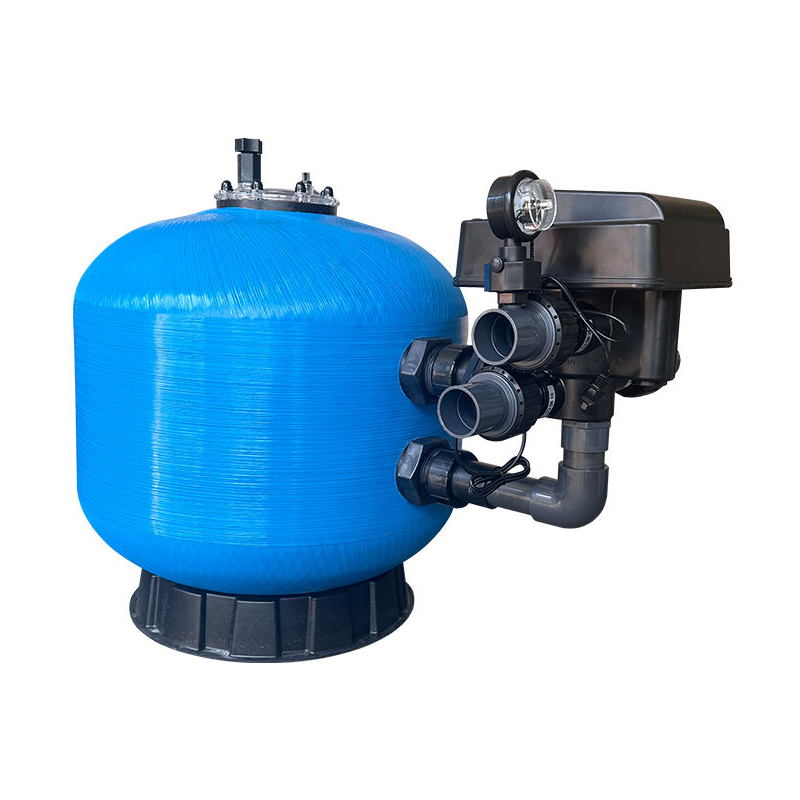
Investing in a modern upgrade is the most prudent decision for systemic fatigue. Contemporary systems are engineered with reinforced lateral manifolds and superior hydraulic designs. When selecting new equipment, look for robust specifications. For instance, a high-quality Sand Filter constructed from UV-resistant bobbin-wound fiberglass ensures maximum durability. Optimal models support a maximum working pressure of 2.5 bar and feature top-tier multi-port valves tested for leak-free operation. Integrating premium equipment ensures optimal water clarity, drastically reduces maintenance time, and prevents the frustrating cycle of constantly topping off wasted media.
Conclusion
Your pool multiport valve is not designed to waste filter media intentionally. In almost every case, media loss stems from aggressive cleaning routines, oversized pumps, or the simple mistake of skipping the crucial rinse cycle. Hidden mechanical issues like a torn spider gasket or brittle laterals quietly leak sand into your pool or out to the yard.
Regularly inspecting your rubber seals and strictly adhering to the pump-off rule before turning the handle keeps your filtration system running flawlessly. Knowing when to upgrade aging equipment to modern, high-pressure fiberglass vessels is equally vital. Proper daily habits ensure your filter media stays exactly where it belongs. For reliable, leak-proof performance, always choose professional-grade pool filtration equipment from Finnforst to keep your swimming pool crystal clear all season long.
FAQ
Does the Waste setting on a multiport valve get rid of sand?
No, the Waste setting is not designed to expel sand. When selected, the internal diverter routes water coming from the pump directly out to the drain pipe, completely bypassing the filter tank and the sand bed. This proves highly useful for draining excess water or vacuuming severe algae blooms without clogging your media. Because the water never enters the tank, discharging sand under normal conditions is physically impossible. Seeing sand exit the pipe here indicates a severe mechanical failure, such as a ruptured internal standpipe.
Why is sand coming out of the waste pipe when I backwash?
Sand discharging during a cleaning cycle means you are dealing with a hydraulic imbalance. The most common reason is overfilling the tank, which eliminates the necessary empty space the sand needs to expand. Another frequent cause involves an oversized pool pump creating too much upward water velocity, lifting heavy sand particles along with the dirt. Using incorrect, lightweight media instead of standard #20 silica pool sand also results in immediate loss.
How often should I change the spider gasket in my pool multiport valve?
Under ideal conditions with balanced water chemistry, a high-quality gasket lasts between 5 to 10 years. Its lifespan relies heavily on user operation. The most critical factor is turning off the pump before moving the handle. Adjusting the valve while the system is pressurized creates friction that can tear or unseat a brand-new gasket in a single day. Inspect it every two to three years. Replace it immediately if the rubber feels stiff or looks flattened.
Can I vacuum to waste with a sand filter?
Yes, vacuuming to waste is one of the distinct advantages of having this type of valve system. Turning the handle to Waste diverts the dirty water pulled by your vacuum head straight out of the hose, bypassing the sand bed entirely. This technique is highly recommended for severe pool issues, like cleaning up a massive algae bloom or flocculant. It saves you from instantly clogging your filter media.
How much sand loss is normal for a pool filter?
The only acceptable amount of sand loss in a properly functioning filtration system is zero. The lateral slots at the bottom of the tank are precisely engineered to be smaller than the diameter of standard pool sand. Water passes through, but the sand cannot. Finding sand accumulating on the pool floor or blowing out the waste hose is an absolute indicator of a mechanical failure or an operational error.
Can a failing multiport valve cause low water pressure?
Yes. If the internal diverter is damaged or the gasket is severely degraded, water can bypass the filter channels entirely. This internal leakage disrupts the designed flow path, reducing the pressure returning to the pool jets. It often mimics the symptoms of a clogged pump impeller or dirty filter media.
How do I know if my laterals are broken or if it is just a valve issue?
The location of the sand provides the best clue. If sand continuously blows out of the return jets directly into the pool during normal filtration, broken laterals are almost certainly the culprit. If sand leaks out of the waste line while the valve is set to Filter, the issue lies within a compromised spider gasket inside the valve housing.


